🔥 3D Printer Black Friday Deals: picks worth watching →
You are torn between two powerhouse brands in the FDM 3D printing world: Sovol vs Bambu. This guide breaks down the key differences to help you choose the right machine for your projects in 2026. Whether you are a beginner or a seasoned maker, we have you covered.
Both Sovol and Bambu Lab offer exceptional printers, but they cater to different needs. From build volume to ecosystem, we compare the Sovol SV08 MAX and Bambu Lab A1 Mini to clarify which one fits your workflow. For a broader look at FDM options, check our FDM 3D printers category.



What will your print cost? Use our filament cost calculator.
Buying Guide
Build Volume
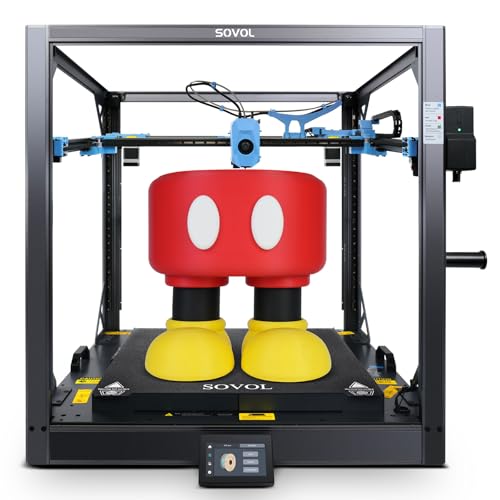
For large-scale projects, the Sovol SV08 MAX offers a massive 500 x 500 x 500 mm build area. This is ideal for industrial parts or oversized props. The Bambu Lab A1 Mini, with its smaller footprint, suits desktop use and smaller models. If size matters, Sovol leads.
Consider your typical print size. The SV08 MAX can handle full-scale prototypes, while the A1 Mini excels in compact, detailed prints. For a deep dive into large-format options, see our anycubic kobra 2 neo review.
Speed and Acceleration
Speed is a major factor in the Sovol vs Bambu debate. The Sovol SV08 MAX reaches 700 mm/s with 40,000 mm/s² acceleration, slashing print times by up to 50%. Bambu Lab printers like the A1 Mini also offer high speeds but with a focus on precision and quiet operation.
If you prioritize rapid prototyping, the SV08 MAX is a beast. For quieter, multi-color prints, the A1 Mini with AMS lite shines. Compare speed profiles in our flashforge vs creality vs bambu.
Ecosystem and Features
Bambu Lab offers a seamless ecosystem with the AMS lite for multi-color printing and a vast model library. The Sovol SV08 MAX is open-source, based on Voron 2.4, giving you full control and upgradeability. It includes a built-in camera and Eddy Current Sensor for automatic leveling.
Your choice depends on preference: a plug-and-play experience with Bambu or a customizable platform with Sovol. For more on multi-head systems, check best 3D printer with multiple heads.
Filament Compatibility
The Sovol SV08 MAX supports high-temperature filaments up to 300°C, handling PLA, TPU, PETG, ABS, ASA, PA, PC, and carbon-fiber blends. Bambu Lab PLA Basic is a great starter filament, but the A1 Mini is limited to lower-temp materials. For advanced materials, Sovol wins.
If you plan to print engineering-grade materials like nylon or polycarbonate, the SV08 MAX with its high-flow nozzle is the better pick. The Bambu Lab Glue Stick for Build Plates ensures adhesion for basic prints.
Final Thoughts
In the Sovol vs Bambu showdown, your choice hinges on scale and ecosystem. For large, high-speed prints and material versatility, the Sovol SV08 MAX CoreXY 3D Printer is unmatched. For beginners or those who value multi-color ease and a compact footprint, the Bambu Lab A1 Mini Combo, A1 Mini 3D Printer&AMS delivers a polished experience. Both are excellent, but they serve different makers.
Frequently Asked Questions
Is Sovol better than Bambu Lab?
It depends on your needs. Sovol offers larger build volumes and open-source customization, while Bambu Lab provides a more integrated, user-friendly ecosystem with multi-color printing. For 2026, Sovol leads in size and speed; Bambu excels in ease of use.
Can the Sovol SV08 MAX print multi-color?
No, the Sovol SV08 MAX is a single-color printer by default. For multi-color printing, you would need to add a separate unit like a filament changer. Bambu Lab’s A1 Mini with AMS lite supports multi-color out of the box.
Which is faster, Sovol or Bambu?
The Sovol SV08 MAX reaches 700 mm/s with 40,000 mm/s² acceleration, making it one of the fastest large-format printers. Bambu Lab printers are also fast but prioritize quiet operation and precision. For pure speed, Sovol wins.
What filaments can the Sovol SV08 MAX use?
The SV08 MAX supports PLA, TPU, PETG, ABS, ASA, PA, PC, and carbon-fiber blends thanks to its 300°C hotend. This makes it versatile for both hobby and industrial applications in 2026. For more on FDM printers, visit our FDM 3D printers page.