

🔥 3D Printer Black Friday Deals: picks worth watching →
Imagine you have a project that requires a single, large-scale prototype or a batch of complex, multi-colored parts. You need a 3D printer that can deliver both size and precision without constant tinkering. This is where the Anycubic Kobra S1 Ace 2 Pro Combo enters the picture, promising a blend of speed, a massive build volume, and native multi-color printing. Our review evaluates this system to see if it lives up to the hype for creators, engineers, and professional makers. If you are considering a large format machine, we also suggest reading our anycubic kobra S1 max review for additional insights.



Buying Guide
Build Volume and Print Size
When choosing a large format 3D printer, the build volume is a primary consideration. The Anycubic Kobra S1 Max Combo offers a 350x350x350mm³ workspace, allowing you to print sizable items in one piece without splitting or gluing. This is ideal for industrial prototypes, large enclosures, or efficient batch printing of smaller parts. For those who need even more scale, checking out the creality ender 5 plus review might provide a useful comparison.
Multi-Color Printing Capabilities
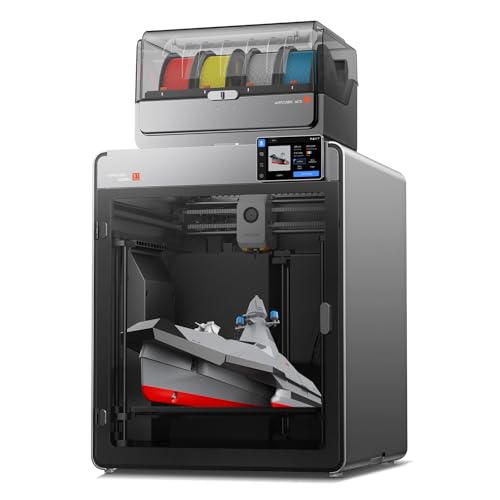
Native multi-color printing is a game-changer for complex models. The Kobra S1 Ace 2 Pro Combo comes with the ACE 2 Pro unit, enabling seamless 4-color printing out of the box. You can expand up to 16 colors by connecting four ACE 2 Pro units, offering extensive creative freedom. This feature eliminates manual filament swaps and allows for vibrant, detailed prints in a single run.
Print Speed and Precision
Speed is critical for productivity. This printer achieves up to 600mm/s print speed with 20,000mm/s² acceleration, finishing a standard Benchy in just 15 minutes. The CoreXY system ensures stable motion, while active vibration compensation reduces ringing for high-quality results. This combination cuts print times by up to 80% without sacrificing accuracy.
Material Versatility
For engineering applications, material support is essential. The heated chamber maintains a stable 65°C, and the hotend reaches 350°C, allowing you to print PLA, PETG, TPU, ABS, ASA, and PVA. The hardened steel extruder gears and nozzle handle abrasive filaments with ease, while the titanium alloy throat tube prevents clogging. This flexibility makes it suitable for both everyday projects and demanding engineering tasks. For more on this topic, see our guide on the best 3D printer for engineering materials.
Final Thoughts
After evaluating the Anycubic Kobra S1 Ace 2 Pro Combo, we find it delivers exceptional value for those who need large-scale, multi-color printing with professional speed and reliability. For users focused on maximum build volume and advanced material support, we recommend the Anycubic Kobra S1 Max Combo. If you already own a Kobra S1 and want to add multi-color capabilities, the Anycubic ACE Pro Upgrade Kit for Kobra S1 Series is a cost-effective solution that integrates seamlessly. Whichever path you choose, this combo elevates your 3D printing experience.
Frequently Asked Questions
What is the build volume of the Anycubic Kobra S1 Ace 2 Pro Combo?
The printer offers a large build volume of 350x350x350mm³, making it suitable for printing large-scale models in one piece or batch printing smaller parts efficiently. This size is ideal for creators and engineers working on sizable projects in 2026.
How many colors can the ACE 2 Pro print?
Out of the box, the ACE 2 Pro supports native 4-color printing. You can expand to up to 16 colors by connecting four ACE 2 Pro units, giving you extensive creative freedom for complex and vibrant models without manual filament changes.
What materials can the Kobra S1 Ace 2 Pro Combo print?
With a 65°C heated chamber and a 350°C hotend, the printer handles PLA, PETG, TPU, ABS, ASA, and PVA. The hardened steel components ensure reliable extrusion for abrasive filaments, reducing warping and cracking for consistent results.
Is the Anycubic Kobra S1 Ace 2 Pro Combo easy to set up for beginners?
Yes, the printer features LeviQ 3.0 auto-leveling with 49-point calibration and real-time flow dynamics, ensuring a perfect first layer every time. This eliminates tedious manual adjustments and makes it accessible for users new to large format 3D printing in 2026.


