🔥 Laser Engraver Black Friday Deals for 2026: picks worth watching →
You have a stack of blank leather patches, a batch of orders waiting, and one question: which machine will burn clean, crisp logos without scorching the grain? Choosing the best laser engraver for leather patches comes down to precision, airflow, and how safely the unit runs in your workspace.
This guide covers seven machines we evaluated for leather patch work, from beginner-friendly enclosed units to fiber lasers built for metal and leather alike. If you also work with hats, our roundup of the best laser engraver for felt hats pairs well with this list.


What to Look for in a Leather Patch Engraver
Leather is forgiving compared to acrylic, but it still punishes a sloppy setup. The right machine keeps edges dark and defined while preventing the charred halo that ruins a patch.
Laser Power and Spot Size
A 10W diode module handles most leather patch engraving cleanly, while 20W gives you faster passes and deeper contrast on thick full-grain hides. Pay attention to spot size: a tighter beam produces finer lettering and cleaner small logos.
If you plan to mark metal snaps or tags alongside leather, a dual-laser setup or a fiber unit is worth the upgrade. Our guide to the best laser engraver for aluminum explains when infrared modules make sense.
Air Assist and Ventilation
Leather smoke is oily and lingers. A strong air assist pump blows debris away from the cut and keeps charring to a minimum, which matters when you are running dozens of patches in a session.
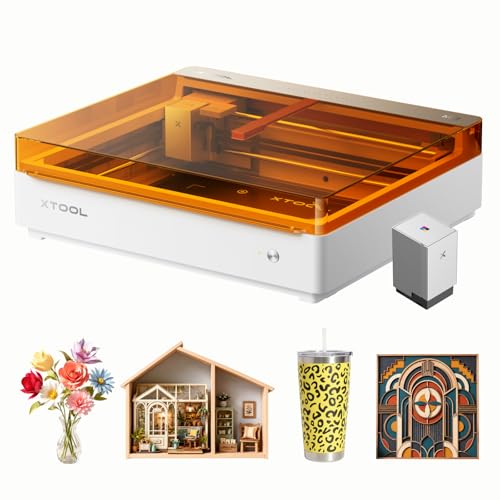
Pair air assist with an enclosure or purifier. Enclosed units like the xTool M2 and AtomStack Kraft contain fumes far better than open-frame machines, especially in a home studio.
Safety Certification and Enclosure
Class 1 certification means the machine is safe to operate with the lid closed, which is a real advantage if family members share your workspace. Look for flame detection, tilt sensors, and limit switches as standard features.
Open-frame diode lasers can still produce excellent patches, but you will need safety glasses and a dedicated ventilation plan. Our diode laser engraver category covers the tradeoffs in more depth.
Software and Workflow
Leather patch work is repetitive, so batch placement and template support save hours. Machines with cameras, like the Creality Falcon2 Pro and xTool M2, let you position artwork visually instead of measuring every patch by hand.
LightBurn compatibility is a plus if you already use it. For a closer look at how one popular model handles precision work, read our ACMER S2 pro review.
Final Thoughts
For most leather patch makers, the BlazeX M3 10W Laser Engraver Machine delivers the best balance of precision, safety, and beginner-friendly setup. If you need full-color printing and dual-camera placement for high-volume patch production, the xTool M2 20W Color Craft Laser Engraver is the more capable choice.
Frequently Asked Questions
What wattage do I need to engrave leather patches?
A 10W diode laser handles most leather patch engraving with clean contrast. Step up to 20W if you work with thick full-grain leather or want faster production speeds without multiple passes.
Can a diode laser cut leather patches cleanly?
Yes, a 20W diode laser can cut leather up to roughly 10mm in a single pass when paired with strong air assist. Thinner garment leather cuts easily at lower power settings.
Do I need an enclosure for leather engraving?
An enclosure is strongly recommended because leather produces oily smoke and odor. Class 1 enclosed machines also protect your eyes without requiring safety glasses during operation.
What is the best laser engraver for leather patches in 2026?
For most hobbyists and small shops, the BlazeX M3 10W stands out for its precision and complete starter kit. Higher-volume makers should consider the xTool M2 20W for its camera-guided workflow and color printing. Browse our full laser engravers hub for more comparisons.