
You’ve just designed a durable gear or a heat-resistant automotive part, but when you try to print it in nylon, the print warps, the bed adhesion fails, or the layer lines crack. Nylon is a powerhouse material, but it demands a printer that can handle high temperatures and a filament that’s engineered for reliability. In this guide, we’ll help you find the best 3D printer for nylon, focusing on filaments and accessories that deliver industrial-grade results.
Whether you’re a professional engineer or a hobbyist pushing the limits of FDM printing, we’ve evaluated a range of products to help you achieve strong, heat-resistant, and warp-free nylon prints. Our top picks include carbon fiber reinforced nylons, easy-printing PA6 blends, and a must-have adhesive for perfect first layers.




Buying Guide: How to Choose the Best Nylon Printing Setup
When you’re looking for the best 3D printer for nylon, you need to consider more than just the printer itself. The filament’s formulation, the nozzle material, and the build surface all play a critical role. Here are the key factors we evaluated in our top picks.
Heat Resistance and Thermal Stability
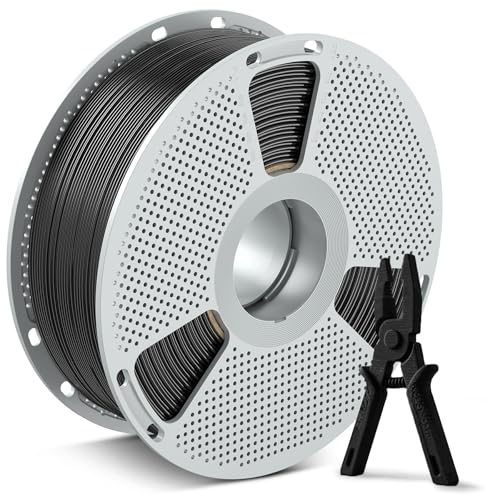
Nylon’s biggest advantage is its ability to withstand high temperatures. Look for filaments with a high heat deflection temperature (HDT). For example, the SUNLU PA6-CF20 can handle up to 209°C, making it ideal for parts near engines or electronics. A printer with an all-metal hotend and a heated bed is essential to reach the required nozzle temperatures of 260-300°C.
If you’re new to high-temp materials, check out our guide on the best 3D printers for beginners to see which models offer the right upgrades.
Moisture Resistance and Drying Needs
Nylon is hygroscopic, meaning it absorbs moisture from the air, which ruins print quality. Premium filaments like the ELEGOO PAHT-CF feature low water absorption, but you’ll still need a filament dryer. Some spools, like the SUNLU PA6-GF, come vacuum-sealed, but you must dry them before printing. A dedicated dryer with a temperature range of 70-110°C is a wise investment.
For a printer with a built-in drying feature, consider the Bambu Lab X1 series, which is compatible with many of these filaments. You can read more about enclosed 3D printers for beginners that offer such convenience.
Warping and Bed Adhesion
Warping is the nemesis of nylon printing. To combat it, you need a heated bed that can reach at least 70°C, and a build surface like PEI or glass with an adhesive. The Magigoo 3D Print Bed Adhesive is specifically designed for nylon on PEI plates, and it reduces warping effectively. Many of our top filaments, like the SUNLU Nylon 6+66, are warp-free, but a little extra help goes a long way.
If you’re printing large parts, you might need a larger build volume. Check out our list of best large-volume printers to see which models can handle bigger nylon projects.
Nozzle and Abrasion Resistance
Carbon fiber and glass fiber nylons are abrasive and will wear out brass nozzles quickly. You’ll need a hardened steel nozzle or a ruby nozzle to handle these materials. The Polymaker Fiberon PA6-CF20 and SUNLU PA6-GF are excellent choices, but they require an abrasion-resistant nozzle. Always check your printer’s compatibility before purchasing.
For a comprehensive look at printers that handle carbon fiber well, see our best 3D printer for carbon fiber guide.
Final Thoughts
Finding the best 3D printer for nylon ultimately comes down to matching your printer’s capabilities with the right filament. For industrial-grade strength and heat resistance, the SUNLU PA6-CF20 Carbon Fiber Nylon 3D Printing filament is a top choice, while the ELEGOO Carbon Fiber PAHT 3D Printer Filament offers excellent low-water absorption for consistent prints. Pair them with a quality adhesive like Magigoo, and you’ll be producing durable, warp-free parts in no time.
Frequently Asked Questions
Do I need a special printer for nylon filament?
Yes, nylon requires a printer with a heated bed (at least 70°C) and a hotend that can reach 270-300°C. Additionally, an enclosed printer is recommended to maintain stable temperatures and prevent warping. Many enclosed FDM printers, like those from Bambu Lab, are suitable.
How do I dry nylon filament?
Nylon must be dried before printing to avoid bubbles and poor layer adhesion. Use a filament dryer set to 70-110°C for 4-12 hours, depending on the filament. For example, SUNLU recommends drying their PA6-CF at 80°C for 24 hours or 110°C for 4 hours.
What is the best bed surface for printing nylon?
PEI sheets, glass with PVA glue, or a dedicated adhesive like Magigoo work best. The Magigoo 3D Print Bed Adhesive is specifically formulated for nylon on PEI plates and reduces warping significantly.
Can I print nylon with a brass nozzle?
It’s not recommended, especially with carbon fiber or glass fiber reinforced nylons. These materials are abrasive and will quickly wear out brass nozzles. Use a hardened steel nozzle or a ruby nozzle for durability.
For more tips on FDM printing, explore our FDM 3D printers category.