

You are ready to bring your ideas to life, but the sheer number of 3D printers on the market can feel overwhelming. Whether you are a hobbyist crafting detailed miniatures, an educator building a classroom makerspace, or a small business owner prototyping products, choosing the right machine is the first critical step. This guide cuts through the noise, presenting ten of the most capable FDM printers available today, from beginner-friendly workhorses to industrial-grade powerhouses. We have evaluated speed, print quality, multi-color capabilities, and ease of use to help you find the perfect match for your projects. Explore our selection of 3D printers to see what fits your workflow.


Buying Guide
Print Speed and Acceleration
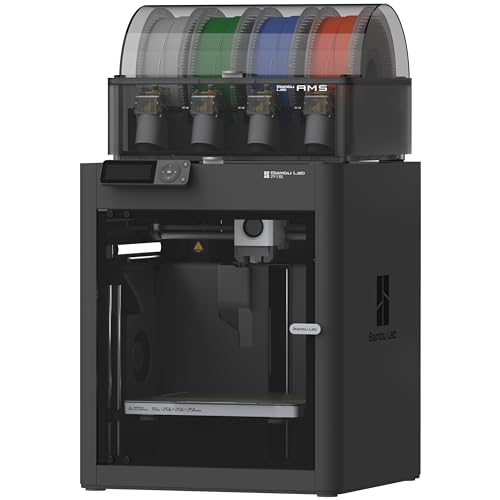
Speed is a game-changer when you are running multiple prints or working on tight deadlines. Modern CoreXY machines, like the Flashforge Adventurer 5M and Bambu Lab P1S, achieve impressive speeds of 500 to 600 mm/s with accelerations up to 20,000 mm/s². This means you can complete a Benchy in under 15 minutes without sacrificing quality. For beginners, a fast printer reduces wait time and keeps projects moving.
Multi-Color and Multi-Material Capabilities
If you want to print vibrant models without manual filament swaps, look for a printer with multi-color support. The Bambu Lab P1S Combo and the Anycubic Kobra X offer seamless integration with AMS units or ACE Pro systems, enabling up to 16 or 19 colors. The Snapmaker U1 takes a different approach with four independent toolheads that swap in just five seconds, eliminating purge waste entirely. This feature is invaluable for complex prototypes and artistic prints.
Build Volume and Enclosure
Consider the size of your largest projects. Most printers in this roundup offer a build volume around 220 to 260 mm³, which suits the majority of hobbyist and professional needs. An enclosed printer, like the Creality K2 Combo or the Flashforge Creator 5 Pro, is essential for printing advanced materials such as ABS, ASA, or PC, as it maintains a stable chamber temperature and reduces warping. For beginners printing only PLA, an open-frame design is perfectly fine.
Ease of Use and Automation
Automation features like auto bed leveling, vibration compensation, and quick-swap nozzles save hours of frustration. Printers such as the Bambu Lab A1 and the Flashforge AD5X offer one-click calibration and intuitive touchscreens, making them ideal for beginners. Remote monitoring via apps like Flash Maker or Bambu Handy allows you to check print progress from anywhere, adding convenience and peace of mind.
Final Thoughts
Choosing the right 3D printer comes down to matching features with your specific needs. For a beginner seeking a reliable, fast, and user-friendly machine, the Bambu Lab A1 3D Printer, Ready-to-Use FDM 3D offers exceptional value with its full-auto calibration and quiet operation. If you need industrial-grade multi-material printing with zero waste, the FLASHFORGE Creator 5 Pro 4-Toolhead 3D Printer delivers unmatched versatility and a heated chamber for advanced materials. Whichever path you choose, these printers will transform your ideas into tangible reality.
Frequently Asked Questions
What is the best 3D printer for beginners in 2026?
The Bambu Lab A1 is an excellent choice for beginners due to its fully automatic calibration, quiet operation, and simple touchscreen interface. It requires minimal setup and delivers high-quality prints right out of the box. For a budget-friendly option, the Flashforge Adventurer 5M also offers auto-leveling and fast printing at a lower price point.
Can I print with multiple colors on a single 3D printer?
Yes, many modern FDM printers support multi-color printing through add-on units like the Bambu Lab AMS or the Anycubic ACE Pro. The Snapmaker U1 uses four independent toolheads that swap automatically, eliminating purge waste. These systems allow you to print complex models with up to 16 or 19 colors without manual intervention.
What materials can I use with an enclosed 3D printer?
Enclosed 3D printers, such as the Creality K2 Combo and the Flashforge Creator 5 Pro, can handle a wide range of materials including PLA, PETG, ABS, ASA, PC, and even nylon. The heated chamber prevents warping and improves layer adhesion for these advanced filaments. Always check the printer’s specifications for maximum nozzle temperature and bed temperature.
How fast can a modern 3D printer print?
High-speed CoreXY printers like the Bambu Lab P1S and the Flashforge Adventurer 5M can reach speeds of 500 to 600 mm/s with accelerations up to 20,000 mm/s². This allows you to print a standard calibration cube in under 20 minutes. However, actual print speed depends on model complexity and filament type, so you may need to adjust settings for optimal quality.


