🔥 3D Printer Black Friday Deals: picks worth watching →
You have just upgraded to a new Creality K2 Plus or Flashforge 5M, and you are eager to start printing. But the stock PTFE tube feels stiff, and you worry about filament jams during long runs. A smooth, reliable PTFE tube is the unsung hero of consistent 3D printing, especially when you are pushing high speeds or using flexible materials like TPU. In this guide, we compare two top-rated PTFE tube kits from Generic that promise ultra-low friction and high-temperature resistance. Whether you are a seasoned maker or a newcomer, this Creality vs Flashforge PTFE tube showdown will help you choose the right upgrade for your workflow. For more on printer comparisons, check out our creality vs prusa.

What will your print cost? Use our filament cost calculator.
Buying Guide
Inner Diameter and Filament Compatibility
Both kits feature a 2.5mm inner diameter, which is wider than the standard 2mm found on many stock tubes. This extra clearance allows 1.75mm filament to glide through with less friction, reducing the chance of jams during high-speed prints. If you often print with TPU or other flexible materials, this design is a game changer.
For printers like the Creality K1 or Flashforge 5M, this upgrade directly improves feeding consistency. You will notice fewer retraction hiccups and smoother extrusion. For a deeper look at extruder upgrades, see our creality K2 plus extruder review.
Material Quality and Temperature Resistance
Both tubes are made from high-quality PTFE (Teflon) that withstands the heat of direct-drive extruders. They resist degradation even when your hotend runs at higher temperatures, ensuring long-term stability. This is especially important for enclosed printers like the Flashforge 5M, where ambient heat can soften inferior tubing.
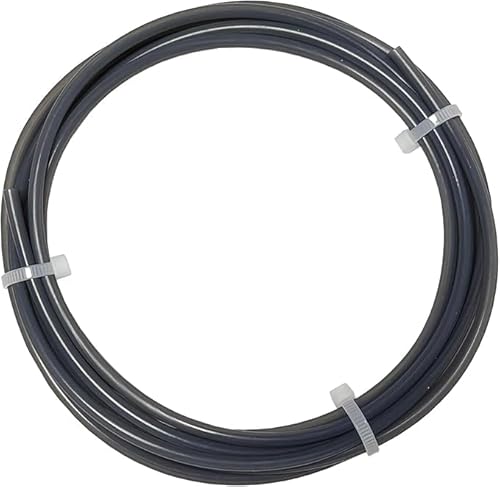
The white and gray variants share the same material formulation, so you can choose based on color preference without sacrificing performance. Both offer excellent corrosion resistance, meaning they will last through hundreds of print hours.
Friction and Feeding Efficiency
The ultra-low friction inner surface is a standout feature. It minimizes resistance as filament moves from the extruder to the nozzle, which is critical for high-speed printing and soft materials. With reduced drag, your printer can maintain precise extrusion rates, leading to better layer adhesion and surface finish.
Both kits are designed for direct-drive extruders, making them ideal for Bambu Lab, Creality, and Flashforge models. If you are curious about how camera monitoring can enhance your prints, read our flashforge adventurer 5M camera review.
Final Thoughts
After evaluating both options, we recommend the white PTFE tube kit for its slightly higher rating and proven compatibility with a wide range of printers, including the Creality K2 Plus and Flashforge 5M. If you prefer a gray tube to match your setup, the gray variant offers identical performance at a comparable value. Both are excellent upgrades for smoother, more reliable prints. You can buy the PTFE Tube Kit 2.5mm ID x 4mm OD in white or the PTFE Tube Kit 2.5mm ID x 4mm OD in gray today.
Frequently Asked Questions
Are these PTFE tubes compatible with my Creality K2 Plus?
Yes, both kits are specifically designed for direct-drive extruders like the Creality K2 Plus, K1, and Ender 3 V3. The 2.5mm inner diameter ensures smooth filament flow, reducing jams during long prints in 2026.
Can I use these tubes with flexible filaments like TPU?
Absolutely. The ultra-low friction inner surface and wider 2.5mm ID make these tubes ideal for TPU and other flexible materials. They minimize resistance, helping your printer maintain consistent extrusion even at high speeds.
What is the difference between the white and gray PTFE tube kits?
The only difference is color. Both kits share the same material quality, temperature resistance, and 2-meter length. Choose white for a classic look or gray to match your printer’s aesthetic in 2026.
How long are these PTFE tubes?
Each kit includes a 2-meter (6.56 feet) length of tubing. This is sufficient for most direct-drive setups and allows some extra length for routing through cable chains or enclosures.