
Whether you are creating a digital avatar for a game, capturing a custom mannequin for fashion design, or building a medical model for prosthetics, finding the right 3D scanner for people is essential. The human body presents unique challenges: complex curves, fine hair, reflective skin, and the need for speed to avoid motion blur. In this guide, we have evaluated seven top-tier 3D scanners from leading brands like Creality, Revopoint, and 3DMakerpro, focusing on models that excel at capturing the human form. For a deeper look at one of our top performers, check out our revopoint MetroX pro 3D scanner review.




Buying Guide
Scanning Speed and Motion Handling
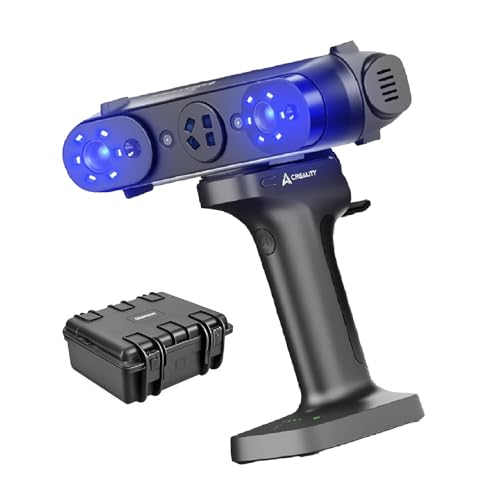
When scanning a person, speed is critical. Even a slight sway can introduce errors that ruin a scan. Look for scanners with high frame rates, ideally 30 fps or more, and features like anti-shake tracking. The Creality 3D Scanner CR-Scan Raptor for 3D offers up to 60 fps in blue laser mode, making it excellent for capturing quick, steady full-body scans.
Infrared (NIR) structured light modes are also beneficial for people, as they are safe for eyes and can handle skin tones and hair better than some laser options. The Creality Raptor Pro and Sermoon S1 both include NIR modes designed specifically for face and body scanning.
Accuracy and Resolution for Fine Details
For lifelike results, you need a scanner that captures subtle facial features, wrinkles, and even pores. Look for accuracy ratings of 0.05 mm or better. The Revopoint MetroX Pro 3D Scanner, Blue Laser Scan delivers industrial-grade precision down to 0.01 mm, ideal for detailed facial scans. For a balance of precision and value, the 3DMakerpro 3D Scanner Moose offers 0.03 mm accuracy with a blue LED structured light source.
Resolution determines how fine the mesh will be. A resolution of 0.1 mm or finer is recommended for capturing hair texture and skin details. Models like the Creality Raptor Pro and Revopoint MetroX Pro excel in this area.
Color Texture Capture
For realistic 3D models of people, color texture mapping is a must. A built-in RGB camera and fill lights ensure accurate skin tones and clothing colors. The Creality Raptor Pro 3D Scanner features 24-bit full-color scanning with 12 circular LED lights, providing vibrant textures even in low light. The 3DMakerpro Moose also supports 24-bit color acquisition for lifelike results.
If you plan to scan for 3D printing, color texture may be less critical, but for digital avatars or archiving, it is a game-changer. For more on large-scale scanning, see our best 3D scanner for large objects guide.
Software and Ease of Use
Scanning people often requires quick setup and intuitive software. Look for packages that include automatic alignment, markerless tracking, and one-click model processing. The CrealityScan software, used by the Raptor series, offers step-by-step tutorials and real-time previews. The JMStudio software from 3DMakerpro provides auto-alignment and error correction, making it beginner-friendly. For a detailed comparison, read our 3DMakerpro fox vs creality ferret article.
Also consider compatibility with your operating system. Most scanners support Windows and macOS, but some, like the Creality Raptor Pro, also work with Android via a dedicated app.
Final Thoughts
After reviewing these seven scanners, our top recommendation for most users is the Creality 3D Scanner CR-Scan Raptor for 3D, which combines fast 60 fps scanning, dual blue and NIR modes for people, and excellent color capture at a reasonable price. For those who need the highest precision for facial features or industrial applications, the Revopoint MetroX Pro 3D Scanner, Blue Laser Scan offers unmatched accuracy and four scanning modes, making it a versatile choice for both people and objects.
Frequently Asked Questions
Can a 3D scanner capture hair accurately?
Yes, but it depends on the technology. NIR structured light and blue laser modes with fine resolution can capture hair texture, especially on the scalp or beard. The Creality Raptor Pro includes a face mapping algorithm that improves hair capture. For best results, use a scanner with at least 0.1 mm resolution.
Is it safe to scan a person with a 3D scanner?
Most consumer and prosumer 3D scanners use Class 1 or Class 2 lasers or LED light, which are safe for skin and eyes. NIR structured light is also considered safe. Always check the manufacturer’s safety guidelines, and avoid staring directly into the laser. For children or sensitive individuals, use NIR mode if available.
What is the best 3D scanner for full-body scans in 2026?
For full-body scans, the Creality Raptor Pro and the Revopoint MetroX Pro are top choices. The Raptor Pro can scan a full body in about two minutes with its NIR mode, while the MetroX Pro offers high precision for detailed body parts. For a budget-friendly option, the 3DMakerpro Moose handles medium-sized objects up to 1500 mm, suitable for torso or upper body scans.
Do I need a powerful computer to run these scanners?
Yes, most 3D scanners require a relatively powerful PC. Recommended specs include an i7 processor (7th gen or newer), 16 GB RAM, and a dedicated GPU with 6 GB VRAM. The Creality Raptor Pro recommends an i7-10th gen with 32 GB RAM for best performance. For more details, check our Creality Otter Lite review for system requirements.