🔥 3D Printer Black Friday Deals: picks worth watching →
If you are printing functional prototypes, end-use parts, or production tools with engineering-grade materials like carbon-fiber composites, PETG, or TPU, you need a 3D printer that can handle high temperatures, precise extrusion, and multi-material flexibility. The best 3D printer for engineering materials in 2026 combines robust hardware, smart calibration, and a tool-changing system that minimizes waste while maximizing throughput. This guide compares seven top-tier models from FLASHFORGE, Snapmaker, and Original Prusa to help you find the right machine for your workshop or lab.


What will your print cost? Use our filament cost calculator.
Buying Guide
Multi-Material and Multi-Color Capability
Engineering projects often require mixing rigid and flexible materials or using soluble supports for complex geometries. Printers like the Snapmaker U1 3D Printer,4-Toolhead with 5s and the FLASHFORGE Creator 5 Multi Color 3D Printer use independent toolheads that swap in seconds, avoiding the waste and color bleeding of single-nozzle systems. This allows true multi-material printing with PLA, PETG, TPU, and carbon-fiber composites in a single job.
Speed and Precision for Engineering Materials
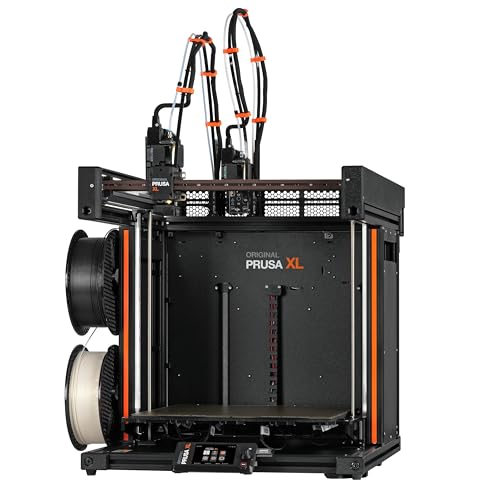
Engineering materials like PA-CF and PETG-CF require higher nozzle temperatures and consistent flow. The FLASHFORGE Creator 5 and Creator 5 Pro reach speeds up to 600 mm/s with CoreXY motion systems and vibration compensation, ensuring dimensional accuracy even during rapid multi-color prints. For large-format work, the Original Prusa XL 2-Toolhead Multi-Material offers a segmented heated bed to reduce warping on big parts.
Automation and Calibration
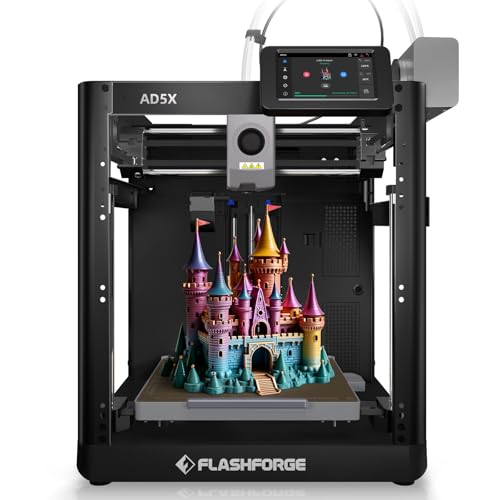
Manual calibration can be a bottleneck in production. Look for printers with auto bed leveling, toolhead offset calibration, and filament detection. The FLASHFORGE AD5X and Creator 5 Pro include vibration compensation and dynamic flow calibration, which adapt to changes in extrusion conditions for repeatable results. The Snapmaker U1 features smart calibration that handles first-layer adhesion and toolhead alignment automatically.
Build Volume and Chamber Control
Large engineering parts demand a spacious build volume and controlled environment. The Original Prusa XL offers a 14.17-inch cubic volume with a segmented heated bed, while the Creator 5 Pro includes a 65°C actively heated chamber to improve layer bonding for high-temperature filaments. For smaller workshops, the FLASHFORGE AD5X and Snapmaker U1 provide 220mm and 270mm cubes respectively, balancing footprint with capability.
Final Thoughts
For most engineering users, the FLASHFORGE Creator 5 Multi Color 3D Printer offers the best balance of speed, material compatibility, and automation at a competitive price. Its four independent toolheads, 7-second swaps, and near-zero waste system make it ideal for prototyping and small-batch production with carbon-fiber and TPU composites. If you need large-format output and a heated chamber for demanding engineering materials, the FLASHFORGE Creator 5 Pro 3D Printer delivers industrial-grade precision with active chamber heating up to 65°C, ensuring strong layer adhesion and minimal warping on large prints.
Frequently Asked Questions
Can these printers handle carbon-fiber reinforced filaments?
Yes. Models like the FLASHFORGE AD5X, Creator 5, and Creator 5 Pro are rated for PLA-CF, PETG-CF, and PA-CF filaments. Their hardened steel nozzles (up to 320°C) and high-flow hotends ensure reliable extrusion without clogging.
What is the advantage of a toolhead changer over a single-nozzle system?
Toolhead changers like the FlashSwap and SnapSwap systems eliminate filament purging and reduce waste by up to 80%. Each toolhead is preloaded and preheated, enabling color changes in 5 to 7 seconds rather than several minutes. This also prevents color mixing and clogging.
Do I need a heated chamber for engineering materials?
For high-temperature filaments like PET-CF or PAHT-CF, an actively heated chamber (like the 65°C chamber on the Creator 5 Pro) improves layer adhesion and reduces warping. For standard PLA and TPU, a heated chamber is optional but still beneficial for large prints.
Which printer is best for beginners in engineering materials?
The FLASHFORGE AD5X is a great starting point due to its auto leveling, filament detection, and user-friendly touchscreen. It supports PLA, TPU, and PETG-CF out of the box, making it accessible while still capable of engineering-grade prints. For more guidance, see our guide to the best 3D printer to start with.