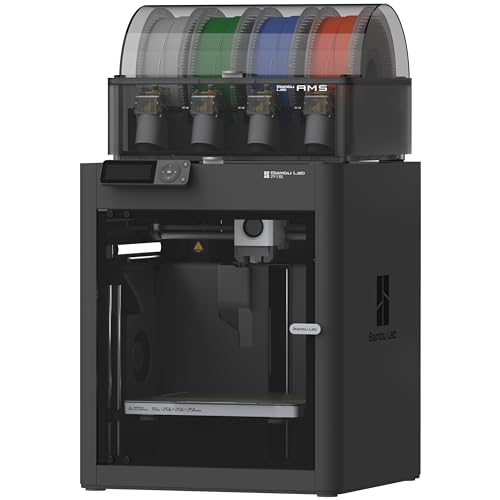

You’ve just unboxed your first 3D printer, and the excitement is real. But then comes the setup: leveling the bed, calibrating the nozzle, and troubleshooting your first print. It can feel overwhelming, especially if you’re new to the hobby. That’s where the Bambu Lab A1 Mini series steps in. Designed with beginners in mind, these printers promise a hassle-free experience so you can focus on creating, not tinkering. In this review, we’ll compare the Bambu Lab A1 mini 3D Printer + LED Lamp Kit and the Bambu Lab A1 Combo + LED Lamp Kit, two excellent options for anyone starting their 3D printing journey. We’ll also provide a buying guide to help you decide which one fits your needs best. If you’re still exploring, check out our guide to the best 3D printers for beginners for more context.


Buying Guide: What to Look for in a Beginner 3D Printer
Choosing your first 3D printer can be tricky with so many specs and features. But for beginners, certain aspects matter more than others. Let’s break down the key factors to consider before you hit that buy button.
Ease of Setup and Calibration
As a beginner, the last thing you want is a printer that requires hours of manual leveling and tweaking. Look for models with fully automatic calibration, like the Bambu Lab A1 series. These printers handle bed leveling, Z-offset, and flow rate compensation on their own, so you can start printing almost immediately after unboxing. This feature alone can save you a ton of frustration and get you to your first successful print faster.
Automatic calibration is a game-changer. It ensures consistent first layers and reduces the learning curve significantly. If you’re a complete novice, this is non-negotiable.
Multi-Color Printing Capability
Multi-color printing opens up a world of creative possibilities, but it can also complicate things. The Bambu Lab A1 mini and A1 Combo offer the AMS lite system, which makes multi-color printing accessible and reliable. If you’re interested in creating vibrant, detailed models without manually swapping filaments, this is a feature to prioritize. However, keep in mind that the A1 mini requires the AMS lite (sold separately), while the A1 Combo includes it in the box.
For those who want to start with single-color printing and expand later, the A1 mini is a flexible option. But if you know you want multi-color from day one, the Combo is a smarter buy.
Print Speed and Quality
Speed and quality go hand in hand. The Bambu Lab A1 series is known for its high-speed printing, with acceleration up to 10,000 mm/s². This means you can produce detailed prints in a fraction of the time compared to older models. But speed isn’t everything; you also need accuracy. The A1’s active flow rate compensation ensures smooth, precise extrusion, so you get clean results every time. For beginners, this balance is crucial because it lets you iterate quickly without sacrificing quality.
Whether you’re printing toys, functional parts, or artistic pieces, a fast and reliable printer keeps the momentum going. And with the Bambu Lab ecosystem, you can easily find and print models from MakerWorld, making the whole experience even more enjoyable.
Ecosystem and Community Support
A great printer is only as good as its software and community. Bambu Lab excels here with the Bambu Handy app and MakerWorld, a vast library of ready-to-print models. This integration simplifies the entire workflow, from finding a design to managing your print. For beginners, having access to a supportive community and a wealth of resources can make all the difference. If you’re new to 3D printing, we recommend checking out our top picks for kids’ 3D printers, which also highlights user-friendly ecosystems.
In addition, the Bambu Lab ecosystem is constantly updated, so you’ll benefit from new features and improvements over time. This long-term support is something to value when making your choice.
Final Thoughts
Both the Bambu Lab A1 mini 3D Printer + LED Lamp Kit and the Bambu Lab A1 Combo + LED Lamp Kit are outstanding choices for beginners, but they serve slightly different needs. If you want a compact, budget-friendly printer that you can upgrade with the AMS lite later, the A1 mini is perfect. On the other hand, if you’re ready to dive into multi-color printing right away and want the complete package, the A1 Combo is the way to go. Both printers deliver exceptional ease of use, high-speed precision, and a fun, creative experience. Whichever you choose, you’ll be joining a thriving community and enjoying countless hours of making.
Frequently Asked Questions
Is the Bambu Lab A1 Mini good for beginners?
Absolutely. The A1 Mini is designed with beginners in mind, featuring fully automatic calibration, a simple touchscreen interface, and a smooth setup process. You can be printing within minutes of unboxing, and the Bambu Lab ecosystem provides plenty of ready-to-print models to get you started. For a deeper dive into beginner-friendly options, see our best beginner 3D printer guide.
What is the difference between the A1 Mini and the A1 Combo?
The main difference is that the A1 Combo includes the AMS lite, which enables multi-color printing, while the A1 Mini requires you to purchase the AMS lite separately. The Combo also comes with an LED Lamp Kit, just like the Mini, but the Combo is a more complete package for those who want to explore multi-color projects from the start.
Can I use the LED Lamp Kit with any 3D printer?
The LED Lamp Kit is specifically designed for Bambu Lab printers, so it’s not compatible with other brands. However, if you have a Bambu Lab A1 or A1 Mini, you can easily print compatible lamp models from MakerWorld and install the kit to create functional decorative lights.
How fast is the Bambu Lab A1 Mini?
The A1 Mini is impressively fast, with acceleration up to 10,000 mm/s². In practice, this means you can complete prints significantly faster than with typical entry-level printers. The active flow rate compensation also ensures that speed doesn’t compromise print quality, so you get both speed and precision.