

🔥 3D Printer Black Friday Deals: picks worth watching →
You just got a new 3D printer and you are ready to create. But the first spool you try keeps jamming or the layers peel apart. Choosing the best filament for 3D printing can feel overwhelming with so many brands and types on the market. This guide covers seven top-rated filaments we have evaluated for quality, consistency, and ease of use. Whether you are a beginner or a seasoned maker, you will find the right material for your next project. For a deeper dive into getting started, check out our guide on the best 3D printer filament for beginners.



What will your print cost? Use our filament cost calculator.
Buying Guide
Filament Material Type
PLA is the most popular choice for its ease of printing and low warping. It works well on most FDM printers without a heated bed, though a heated bed improves adhesion. For functional parts, PLA+ offers added toughness. Silk PLA gives a glossy, shiny finish perfect for decorative items. Glow-in-the-dark filaments add a fun element but require a hardened nozzle due to abrasion. Consider your project needs when selecting the material.
Dimensional Accuracy and Tolerance
A consistent filament diameter is critical for reliable printing. Look for filaments with a tolerance of +/- 0.02 mm or better. This ensures smooth extrusion and prevents clogs or under-extrusion. Brands like SUNLU and Creality are known for their tight tolerances, which we have validated through consistent print results. For more on optimizing print settings, see our creality PLA temperature review.
Spool Size and Color Variety
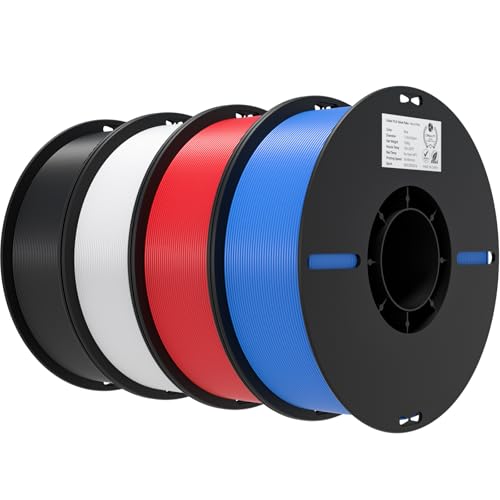
Multi-color bundles and smaller spools (250g) are great for projects that need variety without committing to a full kilogram. They are also ideal for test prints and multicolor models. Larger 1kg spools offer better value for single-color prints. The AMOLEN Silk PLA Bundle provides 4 colors in 200g spools, perfect for small artistic projects.
Printability and Reliability
No one wants to deal with tangles, clogs, or bubbling during a print. Neat winding and thorough drying before packaging prevent these issues. SUNLU uses a self-developed neat winding device to reduce tangles. Creality filaments are vacuum-sealed and dried to avoid moisture problems. A reliable filament saves time and frustration. For keeping your filament in top condition, a best filament dryer is a wise investment.
Final Thoughts
After reviewing these seven options, the best filament for 3D printing depends on your specific needs. For reliable everyday printing with consistent quality, the SUNLU PLA 3D Printer Filament, Black, 1KG is a proven workhorse that handles a wide range of projects. If you want to add vibrant, multicolor effects to your creations without switching spools, the AMOLEN Silk PLA 3D Printer Filament Bundle delivers stunning results with its dual-color silk finish. Both are excellent choices that will elevate your 3D printing experience.
Frequently Asked Questions
What is the best filament for 3D printing for beginners?
PLA is widely recommended for beginners because it prints at lower temperatures, has minimal warping, and does not require a heated bed. Brands like SUNLU and Creality offer affordable, easy-to-use PLA filaments that are reliable and forgiving. For more tips, refer to our beginners guide.
Can I use glow-in-the-dark filament on any 3D printer?
Yes, but glow-in-the-dark filaments are abrasive and can wear down standard brass nozzles. It is best to use a hardened steel nozzle for longevity. The Frucindra Glow in The Dark PLA+ filament works with most FDM printers but requires this nozzle upgrade for extended use.
How do I store PLA filament to keep it dry?
Store PLA filament in a sealed container with desiccant to prevent moisture absorption, which can cause bubbling and poor print quality. Vacuum-sealed spools like those from YOOPAI help keep filament fresh. A dedicated filament dryer is also effective for restoring damp spools.
What is the difference between PLA and PLA+?
PLA+ is a modified version of PLA with improved toughness, layer adhesion, and reduced brittleness. It prints similarly to PLA but offers better durability for functional parts. Many users prefer PLA+ for prints that require more strength, such as mechanical components or tools.


