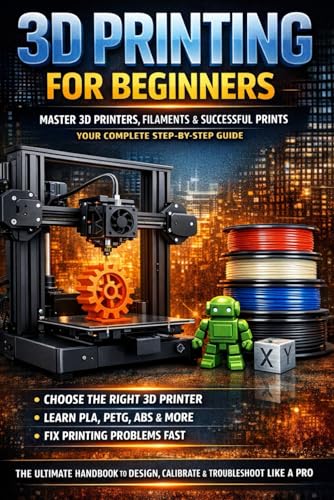

You just unboxed your first 3D printer, and now you are staring at a shelf full of filament spools, wondering which one will actually stick to the bed and not warp into a spaghetti mess. Or maybe you are a seasoned maker who wants to expand beyond PLA but feels lost among PETG, ABS, TPU, and exotic blends. Choosing the right filament is the single most important decision for print quality, strength, and durability, yet most beginners pick based on color alone.
This guide walks you through the essential factors for choosing 3D printer filament, from material properties to print settings and practical applications. Whether you are a hobbyist or a professional, you will learn how to match filament to your specific needs. For a broader look at top filament options, check our guide to the best 3D printer filaments.

Buying Guide: How to Choose 3D Printer Filament
Material Type and Mechanical Properties
The first decision is which material family fits your project. PLA is the easiest to print, with low warping and a wide range of colors, making it ideal for prototypes and decorative items. If you need strength and heat resistance, PETG offers a balance of durability and printability, while ABS is tougher but requires a heated enclosure to avoid cracking.
Flexible filaments like TPU are perfect for gaskets and phone cases, but they demand a direct-drive extruder. For a deep dive into PLA options, see our top PLA filament picks. For stronger parts, explore best PETG filaments.
Print Temperature and Bed Adhesion
Each filament has a specific nozzle and bed temperature range. PLA prints at lower temperatures (around 200°C) and sticks well to a heated bed at 60°C. PETG needs a slightly higher nozzle temperature and a bed around 80°C, while ABS requires a bed above 100°C and a stable environment.
If your printer lacks a heated bed, stick to PLA or PETG, as they are more forgiving. Always check the filament’s recommended settings, which are typically printed on the spool or in the product description. The book 3D Printing Materials Explained covers these details in depth.
Diameter Consistency and Tolerance
Filament diameter (usually 1.75mm or 2.85mm) must be consistent along the entire spool. Variations of more than ±0.05mm can cause clogs or under-extrusion. High-quality brands like Majosta maintain tight tolerances, ensuring smooth feeding and reliable prints.
Check reviews and product specs for diameter tolerance. A cheap spool might save money upfront but cost you hours of failed prints. The guide 3D printer filament category offers more tips on what to look for.
Moisture and Storage
Most filaments, especially nylon and PETG, absorb moisture from the air, which leads to bubbling and weak prints. Always store your spools in a dry box or with desiccant packs. Some brands offer vacuum-sealed packaging with a moisture indicator, which is a sign of quality.
If you notice popping sounds during printing, your filament is wet. Drying it in a filament dryer or a food dehydrator can restore its performance. For more on material handling, see our maker supplies hub.
Final Thoughts
Choosing the right filament is about matching material properties to your project’s demands, and starting with a reliable reference can save you from trial-and-error. For a comprehensive overview, we recommend the 3D Printing Materials Explained book, which breaks down every filament type in simple terms. If you prefer a hands-on approach, try a sample pack from a trusted brand like Majosta to experiment with different materials. Both options will set you on the path to flawless prints.
Frequently Asked Questions
What is the easiest 3D printer filament for beginners?
PLA is the most beginner-friendly filament because it prints at low temperatures, adheres well to a heated bed, and has minimal warping. Many new printers come with a sample spool of PLA. For a deeper look, our PLA filament guide lists reliable options for 2026.
How do I know which filament temperature to use?
Each filament has a recommended temperature range printed on the spool or in the product’s technical data sheet. You can also run a temperature tower to fine-tune the ideal setting for your specific printer and brand. The book 3D Printing Materials Explained includes detailed temperature charts for common materials.
Can I use any filament on any 3D printer?
Most printers accept 1.75mm filament, but some use 2.85mm, so check your printer’s specifications. Additionally, the printer must reach the required nozzle and bed temperatures for the filament. For example, ABS needs a heated bed and often an enclosure, while PLA works on most machines.
Why does my filament keep breaking?
Filament becomes brittle when it absorbs moisture or is exposed to UV light. Store your spools in a dry, dark place, and use a filament dryer if you notice snapping. Some materials like PLA are more prone to brittleness than others, so handle them gently.