
You have decided to invest in a 3D printer, and Bambu Lab is at the top of your list. With models ranging from the compact A1 mini to the powerful P2S Combo, choosing the right one can feel overwhelming. This guide breaks down the best Bambu Lab printer options for 2026, helping you match a printer to your skill level, project needs, and creative ambitions. Whether you are a beginner seeking simplicity or a hobbyist chasing multi-color prints, we have you covered.
Bambu Lab has redefined desktop 3D printing with its focus on speed, automation, and an integrated ecosystem. Their printers are known for quick setup, reliable performance, and innovative features like automatic calibration and multi-color printing. In this review, we evaluate the top models, from the entry-level A1 series to the enclosed CoreXY P1S and P2S lines, to help you find the perfect fit. For a broader look at how Bambu Lab compares to other brands, check out our bambu lab vs creality guide.





Buying Guide: How to Choose the Best Bambu Lab Printer
Print Speed and Precision
Bambu Lab printers are renowned for their speed, but the numbers vary across models. The A1 series offers an acceleration of 10,000 mm/s², while the P1S and P2S push up to 20,000 mm/s² and 600 mm/s respectively. If you need rapid prototyping or high-throughput production, the P2S or P1S are better choices. For most hobbyists, the A1’s speed is more than adequate and delivers exceptional detail.
Precision is equally critical. Features like Active Flow Rate Compensation on the A1 and PMSM Servo Extruder on the P2S ensure consistent extrusion and sharp corners. All models include automatic bed leveling, which removes a major hurdle for beginners. For a deeper dive into speed versus quality, read our bambu lab A1 vs P1S comparison.
Multi-Color Printing Capabilities
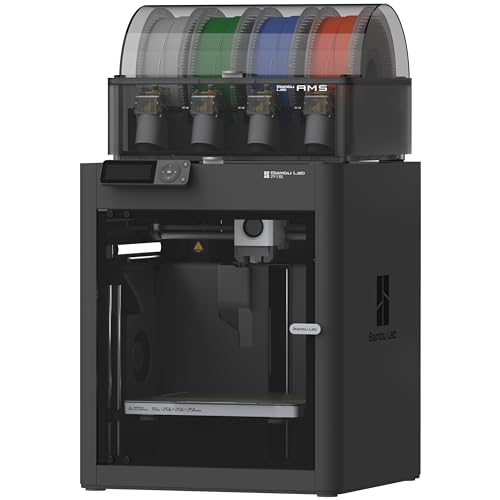
One of Bambu Lab’s standout features is multi-color printing via the AMS (Automatic Material System). The A1 Combo includes the AMS lite, which supports up to four colors, while the P1S Combo and P2S Combo can handle up to 16 colors with the AMS 2 Pro. The AMS 2 Pro also adds built-in filament drying, a huge advantage for hygroscopic materials like PETG and TPU.
If multi-color printing is your priority, the Combo versions are essential. The P2S Combo offers the most advanced system, but the A1 Combo is a more affordable entry point. For a comparison of Bambu Lab’s ecosystem with another major player, see our bambu lab vs prusa article.
Ease of Use and Setup
Bambu Lab printers are designed for a hassle-free experience. The A1 and A1 mini feature full-auto calibration, a 1-Clip quick swap nozzle, and active motor noise canceling for quiet operation. The P1S and P2S also offer 15-minute setup times and AI failure detection, making them accessible even for beginners. The Bambu Handy app and MakerWorld model library further simplify the process.
For absolute beginners, the A1 mini or A1 are ideal. They are compact, quiet, and require minimal tinkering. If you want an enclosed printer for advanced materials like ABS or ASA, the P1S or P2S are better, though they have a slightly steeper learning curve. For a comprehensive beginner’s guide, visit our how to choose a 3D printer article.
Enclosed vs. Open Design
The choice between an open-frame printer (A1 series) and an enclosed one (P1S, P2S) affects material compatibility and print quality. Enclosed printers maintain a stable chamber temperature, which is crucial for engineering-grade filaments like ABS, ASA, and polycarbonate. The P2S even features an Adaptive Airflow System that balances cooling and heat retention.
If you primarily print PLA and PETG, an open design like the A1 is perfectly fine. For advanced materials or if you print in a drafty room, an enclosed model is a wise investment. The P1S and P2S also include a carbon filter for safer operation with certain filaments. For more on choosing the right printer size, see our What Size 3D Printer Do I Need? guide.
Final Thoughts
After evaluating the entire Bambu Lab lineup, our top recommendation for most users is the Bambu Lab A1 3D Printer, Ready-to-Use FDM 3D for its exceptional balance of speed, ease of use, and value. For enthusiasts who demand the highest speed and multi-color capabilities, the Bambu Lab P2S Combo, P2S 3D Printer & AMS 2 Pro is the ultimate choice, offering a fully enclosed design and advanced features for professional-grade results. Whichever model you choose, Bambu Lab’s ecosystem will elevate your 3D printing experience.
Frequently Asked Questions
Which Bambu Lab printer is best for beginners in 2026?
The Bambu Lab A1 mini is the most beginner-friendly model due to its compact size, automatic calibration, and quiet operation. The A1 is also excellent, offering a larger build volume and the option for multi-color printing with the AMS lite. Both are ready to use in minutes and come with access to the MakerWorld model library.
Can I print with multiple colors on a Bambu Lab printer?
Yes, but you need a Combo version that includes the AMS. The A1 Combo supports up to four colors with the AMS lite, while the P1S Combo and P2S Combo can handle up to 16 colors with the AMS 2 Pro. The AMS 2 Pro also features built-in filament drying for better print quality.
What is the difference between the Bambu Lab P1S and P2S?
The P2S is the newer model, offering a higher maximum print speed of 600 mm/s compared to the P1S’s 500 mm/s. It also features a PMSM Servo Extruder, an Adaptive Airflow System, and AI failure detection. The P2S Combo includes the AMS 2 Pro with filament drying, while the P1S uses the original AMS. For most users, the P1S is still a powerful and capable machine, but the P2S represents a significant upgrade in speed and features.
Do Bambu Lab printers require assembly?
Minimal assembly is required. Most models are ready to print in about 15 minutes. The A1 and A1 mini come mostly pre-assembled, with only a few steps needed to attach the spool holder and power on. The P1S and P2S require attaching the display and spool holder, but the process is straightforward and well-documented.