
You are finally ready to jump into 3D printing, but the choice between the Bambu Lab A1 and the P1S is making your head spin. Both are fantastic machines, yet they serve different needs. This guide breaks down the key differences, from speed and multi-color printing to enclosure and ease of use, so you can pick the one that fits your workspace and your projects. For a deep dive into each model, check our bambu lab A1 review and bambu lab P1S review.



Buying Guide: What to Consider Before Choosing
Speed and Precision
Both the A1 and P1S are fast, but they achieve speed differently. The P1S is a CoreXY machine with an enclosed frame, hitting up to 500 mm/s with 20,000 mm/s² acceleration. The A1 is a bed-slinger that reaches 10,000 mm/s² acceleration, which is still impressive for most users. If you print large, detailed parts regularly, the P1S’s rigidity gives it an edge. For quick, small prints, the A1 is more than adequate.
Consider what you print most. If you are prototyping or making functional parts, speed matters. If you are a hobbyist printing figurines, the A1’s precision is enough. Both offer automatic bed leveling and flow rate compensation, so you get consistent first layers.
Multi-Color Capabilities
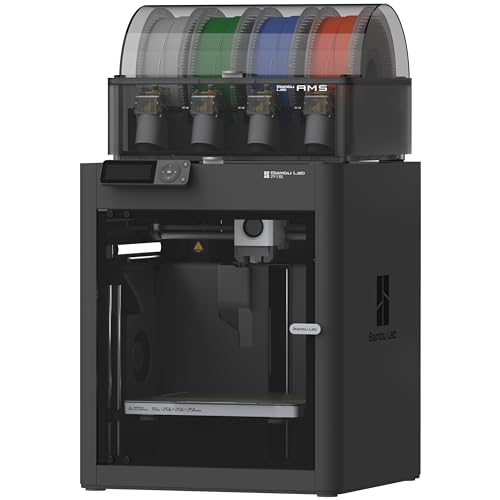
Multi-color printing is a game-changer, and both printers support it via Bambu Lab’s AMS system. The P1S works with the standard AMS, allowing up to 16 colors when you connect multiple units. The A1 uses the AMS Lite, which is more compact and open, but it supports up to four colors per unit. If you want to print with more than four colors, the P1S is the better choice.
That said, the A1 Combo includes the AMS Lite, making it a great entry point for multi-color printing. The P1S Combo includes the AMS as well, so you can start with four colors and expand later. Think about how many colors you realistically need for your projects.
Enclosure and Filament Compatibility
The P1S has a fully enclosed build chamber, which is essential for printing materials like ABS and ASA that are prone to warping. It also reduces noise and keeps fumes contained. The A1 is an open-frame printer, best suited for PLA, PETG, and TPU. If you want to experiment with engineering-grade filaments, the P1S is the way to go.
For beginners, the A1’s open design makes it easier to see your prints and adjust things. But if you plan to print with advanced materials, the enclosed P1S offers better temperature stability and print quality. We have compared these two against other brands in our bambu lab vs prusa and bambu lab vs creality guides.
Ease of Use and Setup
Both printers are designed to be user-friendly, but the A1 takes the crown for simplicity. It features full-auto calibration, a 1-clip quick-swap nozzle, and active motor noise canceling. The P1S also has automatic bed leveling and a 15-minute setup, but it is slightly more involved due to the enclosure. If you are a beginner, the A1’s intuitive touchscreen and quiet operation are hard to beat.
On the other hand, the P1S offers a more robust build and a larger community of users. Both machines work seamlessly with Bambu Studio and the MakerWorld library, so you can start printing right away. For a more in-depth look at a competing model, see our creality K1C review.
Final Thoughts
Choosing between the Bambu Lab A1 and P1S ultimately comes down to your priorities. If you are a beginner or want a quiet, easy-to-use printer for PLA and PETG, the Bambu Lab A1 Combo + LED Lamp Kit is an excellent choice, offering multi-color printing and a friendly ecosystem. If you need an enclosed printer for advanced materials and higher speed, the Bambu Lab P1S Combo, P1S 3D Printer and AMS is the more versatile workhorse. Both deliver exceptional value in 2026, so pick the one that matches your printing goals.
Frequently Asked Questions
Can the Bambu Lab A1 print ABS?
Technically, the A1 can print ABS, but it is not recommended because the open frame leads to warping and poor layer adhesion. For ABS, the enclosed P1S is the better choice as it maintains a stable chamber temperature.
How many colors can the Bambu Lab P1S print?
The P1S can print up to 16 colors when you connect multiple AMS units. Each AMS holds four filaments, so you can link up to four AMS units for a total of 16 colors.
Is the Bambu Lab A1 quiet enough for an office?
Yes, the A1 features active motor noise canceling, which reduces vibrations and noise significantly. It is one of the quietest printers in its class, making it suitable for shared spaces.
What is the difference between AMS and AMS Lite?
The AMS is an enclosed, dry-box system that protects filaments from moisture, while the AMS Lite is an open, compact design that is easier to load. The AMS is compatible with the P1S and offers better filament protection, while the AMS Lite is more affordable and works with the A1.