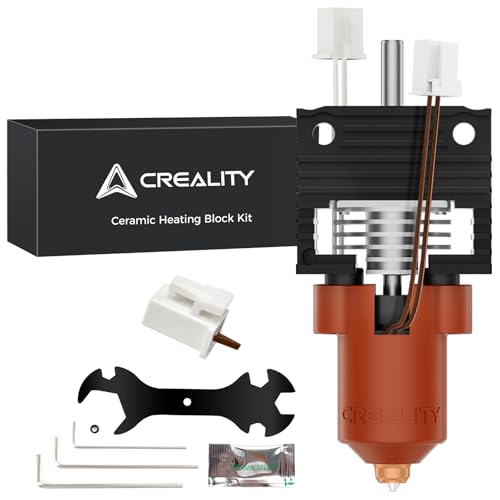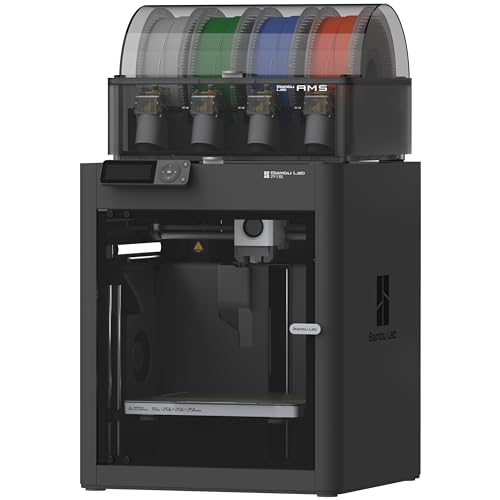

You’ve finally decided to buy a new FDM 3D printer, and now you’re stuck between two giants: Bambu Lab and Creality. Both brands have passionate fans, but they offer very different experiences. This guide will help you navigate the Bambu Lab vs Creality debate, focusing on what matters most for your specific printing needs in 2026.
Whether you’re a beginner looking for plug-and-play simplicity or a tinkerer who loves to customize every component, we’ll break down the strengths and weaknesses of each ecosystem. From print speed to software, we cover the key factors that influence your daily printing experience. If you’re also curious about specific models, our bambu lab P1S review offers a deep dive into one of their most popular enclosed printers.


Buying Guide: What to Consider When Choosing Between Bambu Lab and Creality
Print Speed and Performance
Bambu Lab printers are renowned for their blistering speeds, often reaching 300mm/s or more out of the box. This is thanks to their advanced motion control and lightweight print heads. Creality has responded with their K1 series, which also boasts high speeds, but the overall tuning and consistency often still favor Bambu Lab.
However, speed isn’t everything. You need a filament that can keep up with these rapid movements. That’s where a high-speed PETG, like the OVERTURE High Speed PETG Filament 1.75mm, becomes essential. Its formulation is designed to maintain flow consistency and layer bonding even at 300mm/s, preventing underextrusion and delamination.
Ecosystem and Ease of Use
Bambu Lab has created a tightly integrated ecosystem with their AMS (Automatic Material System) and proprietary slicer. This makes multi-color printing and remote management incredibly seamless. Creality, on the other hand, offers a more open platform, which appeals to users who like to tweak firmware and use third-party software.
If you value a hassle-free experience, Bambu Lab’s ecosystem is hard to beat. For a look at their beginner-friendly options, check out our bambu lab A1 review. If you prefer maximum control and customization, a Creality machine might be more your style. Their K1C model, covered in our creality K1C review, is a great example of their latest advancements.
Reliability and Maintenance
Reliability is crucial for long prints. Bambu Lab printers are generally praised for their out-of-the-box reliability and minimal maintenance. Their hotends, like the Bambu Lab P1P/P1S Hotend Complete Kit, are designed for quick, tool-free swaps, so you can get back to printing in minutes.
Creality machines have improved, but they often require more hands-on tuning and maintenance. The trade-off is that they are typically more repairable and have a larger community of modders. Consider how much time you’re willing to spend on upkeep when making your choice.
Filament Compatibility and Materials
Both brands handle standard filaments like PLA and PETG well. However, for high-temperature materials like ABS or polycarbonate, you’ll need an enclosed printer. Bambu Lab offers the P1S and X1C with enclosures, while Creality has the K1 series. Additionally, printing exotic filaments often benefits from a hardened steel nozzle, which is a key feature of the Bambu Lab P1P/P1S Hotend Complete Kit.
When using high-speed printers, choosing a filament that’s optimized for speed is wise. The OVERTURE High Speed PETG Filament 1.75mm is a solid choice, offering both durability and the ability to keep up with rapid printing. For more on the best Bambu Lab printers, see our guide to the best Bambu Lab models.
Final Thoughts
In the Bambu Lab vs Creality showdown, there’s no single winner; it all depends on your priorities. If you crave speed, seamless multi-color printing, and a polished user experience, Bambu Lab is the way to go, and pairing it with a reliable filament like OVERTURE High Speed PETG Filament 1.75mm ensures top-notch results. If you’re a tinkerer who loves customization and doesn’t mind a learning curve, Creality offers excellent value and flexibility. For maintaining your Bambu printer, the Bambu Lab P1P/P1S Hotend Complete Kit is a practical investment for keeping your machine in peak condition. Ultimately, both brands have their merits, and your choice should align with your experience level and what you expect from your printing journey.
Frequently Asked Questions
Is Bambu Lab better than Creality?
Bambu Lab generally offers a more refined, out-of-the-box experience with faster speeds and a seamless ecosystem. Creality provides more open-source flexibility and a lower entry price, but may require more tinkering. The best choice depends on your priorities and experience level.
Can I use third-party filaments with Bambu Lab printers?
Yes, Bambu Lab printers can use third-party filaments, including high-speed PETG options like OVERTURE. However, using the AMS requires spools that fit the dimensions, and you may need to adjust slicer settings for optimal results. Always ensure the filament is dry and compatible with your nozzle temperature.
Which is more reliable for long prints: Bambu Lab or Creality?
Bambu Lab printers are often considered more reliable out of the box, with features like automatic calibration and a robust hotend design. Creality machines can be equally reliable after proper setup and tuning. For peace of mind, consider using high-quality filament and regular maintenance.
Do I need a hardened steel nozzle for PETG printing?
PETG is not abrasive, so a standard brass nozzle works fine. However, a hardened steel nozzle, like the one in the Bambu Lab P1P/P1S Hotend Complete Kit, is beneficial if you plan to print abrasive materials like carbon fiber or glow-in-the-dark filaments, as it resists wear and extends nozzle life.