

Imagine unboxing a 3D printer that prints flawlessly out of the box, with no manual leveling, no failed first layers, and no hours of tweaking. That’s the promise of Bambu Lab. Whether you’re a curious beginner or a seasoned maker, Bambu Lab has transformed the FDM landscape with speed, precision, and user-friendly features. In this guide, we’ll walk you through the best Bambu Lab 3D printers for 2026, covering everything from the compact A1 mini to the powerhouse P2S Combo. We’ll help you match the right machine to your skill level, project needs, and budget.
Bambu Lab’s lineup is diverse, but each model shares a core philosophy: make 3D printing accessible and enjoyable. With automatic calibration, active flow rate compensation, and a seamless ecosystem, these printers are designed to reduce friction and boost your creativity. If you’re new to 3D printing, you might also want to check our best 3D printer under $500 guide for budget-friendly options.




Buying Guide: What to Look For in a Bambu Lab 3D Printer
Speed and Acceleration
One of Bambu Lab’s biggest selling points is speed. Models like the A1 reach 10,000 mm/s² acceleration, while the P1S and P2S push up to 20,000 mm/s². This means you can produce prototypes or toys in hours, not days. But speed isn’t just about the numbers; it’s about maintaining quality at those speeds. Bambu’s Active Flow Rate Compensation ensures consistent extrusion, so fast prints still come out clean.
If you’re printing large functional parts, check out our best large 3D printer guide for bigger build volumes.
Multi-Color and Multi-Material Capabilities
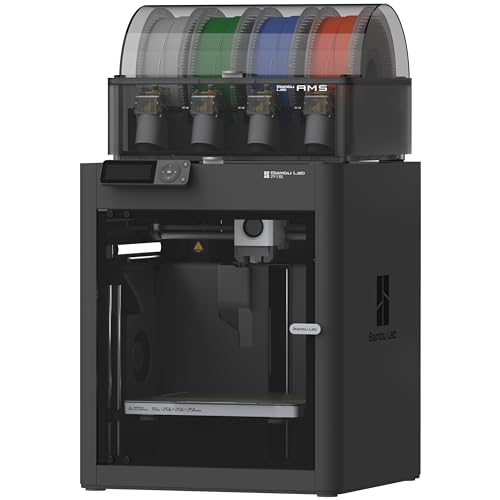
Bambu Lab’s AMS (Automatic Material System) allows you to print with up to 16 colors, opening up endless creative possibilities. The A1 Combo includes the AMS Lite, while the P1S and P2S use the full AMS. If you love vibrant, detailed prints, multi-color is a game-changer. For a deeper dive, our best multicolor 3D printer article covers this feature extensively.
Ease of Use and Setup
All Bambu Lab printers feature full-auto calibration, so you never have to manually level the bed. The A1 and A1 mini are particularly beginner-friendly, with a simplified touchscreen and a 1-Clip quick swap nozzle. The P1S and P2S are also easy to set up, with most users printing within 15 minutes. If you’re buying for a child or a classroom, the A1 mini is a fantastic choice.
For more family-friendly options, see our best 3D printer for kids guide.
Enclosure and Filament Compatibility
An enclosed printer, like the P1S or P2S, is better for advanced materials like ABS, ASA, and nylon because it maintains a stable chamber temperature. The A1 series is open, which is fine for PLA, PETG, and TPU. The P2S even has an adaptive airflow system that can keep the chamber at 50°C for engineering-grade filaments. Consider what materials you plan to use before choosing.
Final Thoughts
Choosing the right Bambu Lab printer comes down to your specific needs. For beginners and hobbyists who want a reliable, quiet, and easy-to-use machine, the Bambu Lab A1 3D Printer is an outstanding entry point, especially with its multi-color AMS Lite option. On the other hand, if you’re a professional or a serious enthusiast who needs speed, an enclosed chamber, and the ability to print with advanced materials, the Bambu Lab P2S Combo is the ultimate choice. Both models offer exceptional value and performance, so you can’t go wrong.
Frequently Asked Questions
Which Bambu Lab 3D printer is best for beginners?
The Bambu Lab A1 mini is perfect for beginners due to its compact size, automatic calibration, and simple setup. It’s also the most affordable, making it a low-risk way to enter the hobby. The A1 is a step up with a larger build volume, still very user-friendly.
Can I print with multiple colors on any Bambu Lab printer?
Yes, all Bambu Lab printers support multi-color printing, but you’ll need the AMS (or AMS Lite for the A1 series). The P1S and P2S can handle up to 16 colors when connected to multiple AMS units. The A1 Combo includes the AMS Lite for four-color prints out of the box.
What is the difference between the P1S and P2S?
The P2S is the newer model with a higher max speed (600 mm/s vs 500 mm/s), a built-in filament dryer in the AMS 2 Pro, and an adaptive airflow system. It also features AI error detection. The P1S is a solid, proven workhorse that offers great value, especially if you don’t need the latest enhancements.
Are Bambu Lab printers quiet?
Yes, Bambu Lab printers are designed with active motor noise canceling, making them quiet enough for a home office or bedroom. The A1 series is particularly quiet, while the enclosed P1S and P2S also operate at acceptable noise levels. For more on choosing a printer, check our top 3D printers guide.


