
You have a vision: a custom wooden sign, a personalized leather wallet, or a set of engraved acrylic coasters. But the thought of learning how a laser engraver works feels intimidating. You are not alone. Many beginners wonder if the technology is too complex or expensive. The truth is, diode laser engravers have become incredibly accessible. This guide explains the core principles behind laser engraving, reviews four top models for 2026, and helps you choose the right machine for your creative goals.
Whether you are a hobbyist, a small business owner, or a curious maker, understanding the basics of laser engraving will empower you to make an informed purchase. We cover everything from beam generation to material interaction, so you can start creating with confidence.



Buying Guide
Laser Power and Wavelength
The laser module is the heart of any engraver. Power, measured in watts (W), determines how deeply and quickly the laser can cut or mark materials. Diode lasers typically range from 5W to 20W. Higher power means faster engraving and the ability to cut thicker materials like wood and acrylic. Wavelength also matters: most diode lasers use a blue or near-infrared beam that works well on organic materials but may struggle with clear acrylic or metal without a coating.
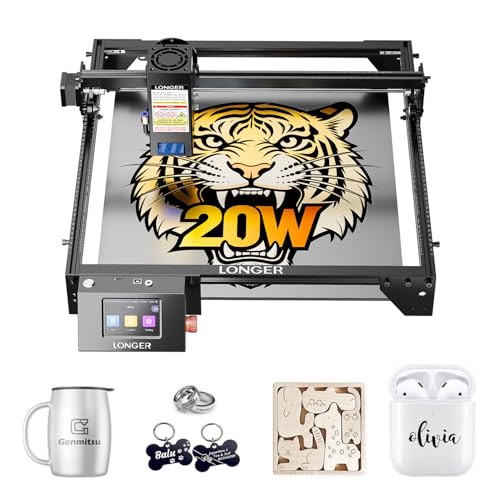
For example, the LONGER Ray5 Laser Engraver and Cutter Machine,20W offers a 20W module that can cut through 15mm pine in a single pass. If you primarily engrave wood, a 5W to 10W laser is sufficient. For more demanding projects, consider a higher power unit.
Engraving Area and Precision
The working area defines the maximum size of your project. Most diode lasers offer a workspace between 300 x 300 mm and 400 x 400 mm. A larger area lets you tackle bigger items like cutting boards or signs. Precision, measured in spot size and accuracy, affects the detail in your engravings. A finer spot size (e.g., 0.04 mm) produces sharper text and intricate graphics.
The ELIDOR 6000mW Laser Engraver and Cutter Machine features a 0.04 x 0.14 mm spot and accuracy up to 0.01 mm, making it ideal for detailed portraits and personalized gifts. For larger projects, the LONGER Ray5 offers a 400 x 365 mm area.
Software and Connectivity
User-friendly software is essential for a smooth workflow. Most diode lasers support LaserGRBL (Windows) and LightBurn (cross-platform). Some machines also offer Wi-Fi or app control for wireless operation. If you are a beginner, look for a model with intuitive software and ready-made templates.
The xTool M2 10W Laser Engraver stands out with its xTool Studio software, which includes hundreds of templates and an AI image generator. This makes it easy to start creating without a steep learning curve. For more advanced users, the LONGER Ray5 supports both online and offline operation via USB, TF card, and Wi-Fi.
Safety Features and Build Quality
Laser engraving involves a concentrated beam of light, so safety is paramount. Look for machines with enclosed designs, protective shields, and emergency stop buttons. A sturdy frame reduces vibration and improves engraving consistency. Some models include air assist nozzles to reduce smoke and debris, which also enhances cut quality.
The xTool M2 is a Class 1 laser engraver with a fully enclosed design and real-time monitoring, making it safe for home use. The LONGER Ray5 includes a protective shield that filters over 95% of laser radiation, along with overheating and motion protection. For a budget-friendly option, the Twotrees TTS-55 Pro Laser Engraver 5500mW Laser features a metal air-assisted nozzle and red laser shield.
Final Thoughts
Understanding how a laser engraver works opens up a world of creative possibilities. For beginners seeking an affordable and precise entry point, the ELIDOR 6000mW Laser Engraver and Cutter Machine offers excellent value with its fine detail and compact design. If you need more power for cutting thicker materials or running a small business, the LONGER Ray5 Laser Engraver and Cutter Machine,20W delivers high-speed performance and a large workspace. Both machines are backed by reliable support and will help you bring your ideas to life.
Frequently Asked Questions
How does a laser engraver work step by step?
A laser engraver works by focusing a high-energy beam of light onto a material’s surface. The beam heats the material, causing it to vaporize or change color. The laser head moves along the X and Y axes, following a design file to create the desired pattern. The process is controlled by software that converts your image or text into machine instructions.
What materials can a diode laser engraver cut?
Diode laser engravers can cut wood, leather, acrylic, paper, cardboard, and some fabrics. They can also engrave coated metals, glass, ceramic, and stone. However, they cannot cut clear acrylic or uncoated metal without special preparation. For metal engraving, you may need a fiber laser or a diode laser with an IR module.
Is a laser engraver safe to use at home?
Yes, modern diode laser engravers include safety features like enclosed housings, protective shields, and automatic shutoff. Always use the provided safety goggles and ensure proper ventilation. Machines like the xTool M2 are Class 1 certified, meaning they are safe for home use with no risk of eye exposure during normal operation.
What is the difference between a diode laser and a CO2 laser?
Diode lasers use semiconductor diodes to produce a focused beam, while CO2 lasers use a gas mixture excited by electricity. Diode lasers are more compact, affordable, and efficient for organic materials. CO2 lasers are more powerful and can cut thicker materials and clear acrylic. For a detailed comparison, read our guide on diode vs CO2 laser.