🔥 3D Printer Black Friday Deals: picks worth watching →
You have been eyeing a new 3D printer that can handle complex multi-material prints without constant babysitting. Maybe you are an engineer prototyping functional parts, or a maker pushing the limits of what is possible with FDM. In this original Prusa CORE One+ review, we examine two of Prusa Research’s most advanced machines: the enclosed CORE One+ DIY kit and the large-format Prusa XL. We will help you decide which one fits your workflow for 2026.
Both printers represent Prusa’s commitment to reliability and innovation, but they target different user needs. The CORE One+ offers a rewarding build experience and high-speed printing in a compact enclosure. The Prusa XL delivers multi-material capability on a grand scale. Let us dive into the details of this creality vs prusa comparison, though here we focus solely on Prusa’s own lineup.



What will your print cost? Use our filament cost calculator.
Buying Guide
Build Volume and Scale
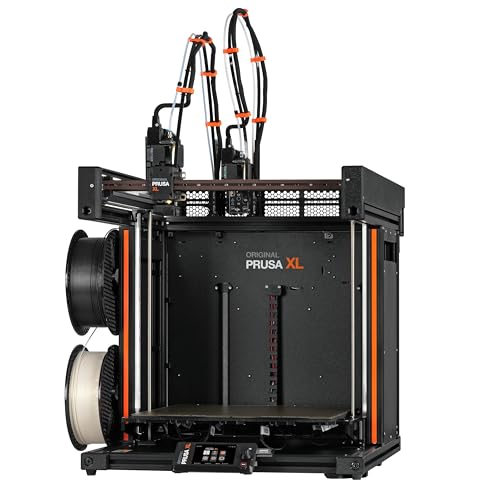
One of the first decisions you face is how large your prints need to be. The Original Prusa XL 2-Toolhead Multi-Material offers a generous build volume of 14.17 inches cubed, which is ideal for large prototypes or multiple parts in one go. If you regularly print big items like enclosures or jigs, the XL is the clear choice.
In contrast, the Original Prusa CORE One+ DIY Enclosed High-Speed is more compact, making it perfect for a desktop setup. Its enclosed chamber still supports a respectable build area, but you will not be printing oversized parts. For those who prioritize space efficiency, the CORE One+ wins. For more on large-format options, check out our Flashforge AD5X Multicolor 3D Printer Review.
Multi-Material Capabilities
Multi-material printing opens up possibilities for soluble supports, dual-color models, and composite parts. The Prusa XL comes with a dual-toolhead system that switches materials seamlessly, reducing waste with intelligent purge algorithms. This is a game-changer for functional prototypes that require support structures or flexible components.
The CORE One+ is a single-toolhead machine, but it still prints a wide range of filaments including PLA, PETG, ABS, and even carbon fiber composites. If you rarely need multi-material prints, the CORE One+ offers excellent value. For those who need multi-color or multi-material, the XL is the only choice here.
Ease of Assembly and Setup
Prusa kits are famous for their detailed instructions and solder-free assembly. The CORE One+ DIY kit takes 15 to 20 hours to build, and the process teaches you every component of the printer. This is ideal for hobbyists who want to understand their machine inside out.
The Prusa XL arrives mostly assembled, with only a few parts like the LCD and extruder needing installation. This makes it faster to get started, especially for professionals who need to minimize downtime. If you enjoy building, the CORE One+ is rewarding; if you want to print immediately, the XL is more convenient. For a different take on build quality, see our creality K2 plus extruder review.
Chamber Control and Material Compatibility
An enclosed chamber is crucial for printing engineering-grade materials like Nylon, ASA, and Polycarbonate. The CORE One+ features active chamber heating up to 55°C with an automatic top vent, giving you precise control over the environment. This ensures consistent layer adhesion and reduces warping.
The Prusa XL is an open-frame design, though it can be enclosed with an optional accessory. For high-temperature materials, the CORE One+ is the better choice out of the box. If you primarily print PLA and PETG, the XL’s open design is fine. For more on material-specific printers, read our best 3D printer for flexible material in 2026.
Final Thoughts
Choosing between these two Prusa machines comes down to your specific needs. The Original Prusa XL 2-Toolhead Multi-Material is the powerhouse for large-scale, multi-material projects, offering industrial-grade reliability and a massive build volume. If you need to print complex prototypes or production parts with soluble supports, the XL is your workhorse. On the other hand, the Original Prusa CORE One+ DIY Enclosed High-Speed is a fantastic all-rounder for enthusiasts and professionals who want high speed, a controlled chamber, and the satisfaction of building their own printer. It handles a wide range of materials and fits neatly on a desk. Both printers are backed by Prusa’s excellent support and ecosystem, so you can confidently invest in either.
Frequently Asked Questions
Is the Original Prusa CORE One+ worth buying in 2026?
Yes, the CORE One+ offers excellent value for its price, combining high-speed CoreXY motion with an enclosed chamber and a rewarding DIY build. It is a top choice for makers who want professional-quality prints without the premium of a fully assembled machine. For more on Prusa alternatives, see our bambu lab black friday deals.
Can the Prusa XL print flexible materials?
Yes, the Prusa XL can print flexible filaments like TPU, especially with its dual-toolhead system that allows for a dedicated extruder. The segmented heated bed also helps with adhesion for flexible parts. However, for best results, we recommend using a direct-drive extruder.
How long does it take to assemble the CORE One+ kit?
Most users complete the assembly in 15 to 20 hours, depending on experience. The kit includes detailed step-by-step instructions and 1:1 scale templates, making it accessible even for beginners. No soldering is required.
Does the Prusa XL support offline printing?
Yes, the Prusa XL can operate fully offline, with a removable Wi-Fi module and local processing. This is ideal for schools or businesses that need to keep designs secure. The CORE One+ also offers offline operation.