🔥 3D Printer Black Friday Deals: picks worth watching →
You have just finished a meticulous 3D print with PLA, only to find stringing and layer adhesion issues. The culprit is often moisture absorbed by your filament. A dedicated dryer solves this, and the SUNLU E2 dryer review shows the brand’s commitment to this niche. This SUNLU S4 Pro review covers the latest dual-zone model designed for serious makers and professionals who need reliable drying for a variety of materials.
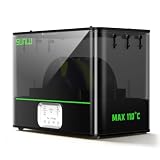
We evaluated the SUNLU 3D Printer Filament Dryer S4 Pro,Dual-Zone to see how it handles ABS, PLA, PETG, and Nylon. Its 380W PTC heater and auto humidity control promise consistent results. Let us break down its performance and features.


Buying Guide
Dual-Zone Temperature Control
Filament drying is not one-size-fits-all. PLA dries best around 55°C, while PETG and Nylon require higher temperatures up to 80°C. The S4 Pro offers dual-zone control, letting you set two separate temperature zones within the same chamber. This means you can dry different spools simultaneously without compromising material integrity.
For users working with engineering materials, this feature is a time saver. Check our guide on the best filament dryer for engineering materials in 2026 for more context on high-temperature drying needs.
Heater Type and Power
The S4 Pro uses a 380W PTC (Positive Temperature Coefficient) heater. PTC heaters are self-regulating, meaning they maintain a stable temperature without overshooting. This prevents hot spots that could damage sensitive filaments like PLA. The 380W rating provides rapid heat-up and consistent drying cycles.
Compared to resistive heaters, PTC is safer and more energy-efficient. It also supports annealing, which can relieve stress in printed parts when done after drying. This adds value for advanced users.
Auto Humidity Control
Humidity is the enemy of filament. The S4 Pro includes an auto humidity control system that monitors internal moisture levels and adjusts drying time accordingly. This means you do not have to guess how long to run a cycle. The dryer stops when the target humidity is reached, saving energy and preventing over-drying.
This feature is especially useful for hygroscopic materials like Nylon and PETG. For a broader look at filaments, see our best filament for 3D printing guide.
Maximum Temperature and Material Compatibility
The dryer reaches up to 85°C, which covers most common filaments: PLA (55-60°C), ABS (70-80°C), PETG (65-75°C), and Nylon (70-85°C). It also supports annealing for PLA at around 60°C. This wide range makes the S4 Pro versatile for hobbyists and professionals alike.
If you use specialty filaments, verify their drying temperatures. For outdoor-use filaments, check the best filament for outdoor use in 2026 article for recommendations.
Final Thoughts
The SUNLU 3D Printer Filament Dryer S4 Pro,Dual-Zone is a well-rounded solution for anyone serious about print quality. Its dual-zone control, PTC heater, and auto humidity management address the core challenges of filament drying. For pure PLA drying, the SUNLU 3D Printer Filament Dryer S4 Pro,Dual-Zone excels with precise temperature control, while users needing higher temperatures for Nylon will appreciate its 85°C ceiling. We recommend it for makers who want reliable, hands-off drying.
Frequently Asked Questions
How long does the SUNLU S4 Pro take to dry PLA filament?
Drying time depends on filament moisture level and ambient humidity. Typically, a full cycle for PLA at 55°C takes 4 to 6 hours when using auto humidity control. The S4 Pro stops automatically once the target humidity is reached.
Can the S4 Pro dry multiple spools at once?
Yes, the dual-zone design allows you to dry two different filament types simultaneously at different temperatures. For example, you can set one zone for PLA at 55°C and another for PETG at 70°C. This saves time for users with mixed material projects.
Is the SUNLU S4 Pro safe for annealing 3D prints?
Yes, the S4 Pro supports annealing with its precise temperature control up to 85°C. For PLA, annealing at 60°C for 30 minutes can improve layer adhesion. Always follow manufacturer guidelines for your specific filament. For more on PLA settings, see our creality PLA temperature review.
Does the S4 Pro require a special power outlet?
The S4 Pro draws 380W, which is standard for a household outlet in most regions. It uses a typical AC power cord. Ensure your circuit can handle the load, especially if running other high-power devices simultaneously.