🔥 3D Printer Black Friday Deals: picks worth watching →
You have just finished a long print, only to find stringing, layer adhesion problems, or a rough surface finish. Damp filament is often the culprit, and it can ruin hours of work. Whether you print with PLA, PETG, or high-performance nylon, a reliable filament dryer is essential for consistent results. In this SUNLU E2 dryer review, we evaluate the top SUNLU drying solutions, from the versatile S4 to the high-temperature E2, to help you choose the right model for your setup. For a broader look at drying options, check out our guide to the best filament dryer of 2026.


Buying Guide
Capacity and Multi-Spool Drying
Consider how many spools you need to dry at once. The SUNLU S4 models hold up to four 1 kg spools, making them ideal for multi-color prints or feeding multiple printers. If you work with large or multiple reels simultaneously, a larger capacity saves time and ensures consistent moisture levels across your filament inventory.
Temperature Range and Material Compatibility
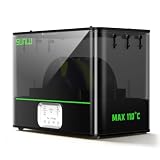
Different filaments require different drying temperatures. PLA dries well at around 50°C, while nylon and polycarbonate need higher heat. The SUNLU S4 reaches 70°C, suitable for most materials, while the S4 Pro goes up to 85°C and includes annealing capability. For engineering filaments like PEEK or PEI, the E2 model offers a maximum of 110°C. Always match the dryer’s temperature range to the materials you use most often. For more on drying high-performance materials, see our best filament dryer for engineering materials guide.
Heating Technology and Airflow
Efficient heating and even airflow prevent hot spots and ensure uniform drying. The SUNLU S4 uses a 350W PTC heater with three circulation fans, providing consistent temperature distribution. Higher wattage models like the E2 (500W) heat up faster and maintain higher temperatures. Look for dryers with active fan circulation rather than passive convection for better performance.
Safety and Smart Features
Safety is critical when running a dryer for long periods. The SUNLU S4 includes a triple-safe system with a backup thermal switch and software monitoring. Intelligent humidity control automatically starts drying when relative humidity rises above 30 to 50% and stops below 25%, protecting your filament from reabsorbing moisture. These features add peace of mind and extend filament life.
For more advice on choosing the right filament for your projects, explore our best filament for 3D printing resource.
Final Thoughts
After evaluating SUNLU’s lineup, we recommend the SUNLU Official Filament Dryer S4 for most users who need a reliable, high-capacity dryer for standard materials like PLA and PETG. For those who work with engineering filaments or require annealing capabilities, the SUNLU E2 3D Printer Filament Dryer offers the highest temperature range and dual-chamber design, making it a powerful choice for advanced applications.
Frequently Asked Questions
How long does it take to dry filament in a SUNLU dryer?
Drying time depends on the material and moisture level. For PLA, 4 to 6 hours at 50°C is usually sufficient. For nylon or PETG, you may need 8 to 12 hours at higher temperatures. The SUNLU S4 and E2 both allow you to set precise times and temperatures for optimal results.
Can I use the SUNLU E2 for annealing prints?
Yes, the SUNLU E2 is designed for both drying and annealing. It can reach 110°C, which is suitable for annealing many engineering filaments. The dual-chamber design helps maintain stable temperatures during the annealing process, improving layer adhesion and part strength.
Will a filament dryer work with all 3D printer brands?
Most filament dryers, including SUNLU models, are compatible with any FDM printer that uses 1.75 mm, 2.85 mm, or 3.0 mm filament. The dryer simply feeds dried filament to your printer, regardless of brand. For multi-printer setups, the S4 can supply up to four printers simultaneously.
How do I maintain my SUNLU filament dryer?
Regular maintenance keeps your dryer performing well. Clean the interior with a soft cloth after use to remove dust or filament debris. Check the fans and vents for blockages. Store the dryer in a dry place when not in use. Refer to the user manual for specific cleaning instructions for your model.