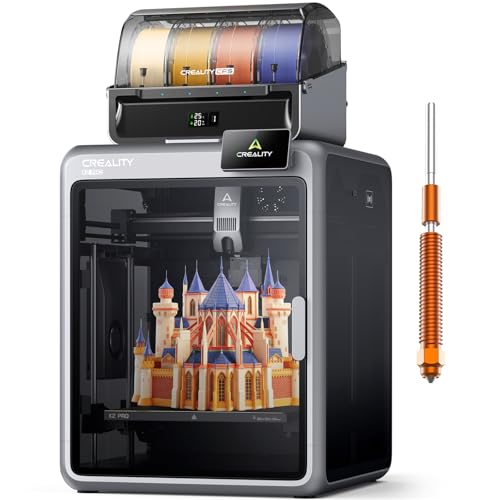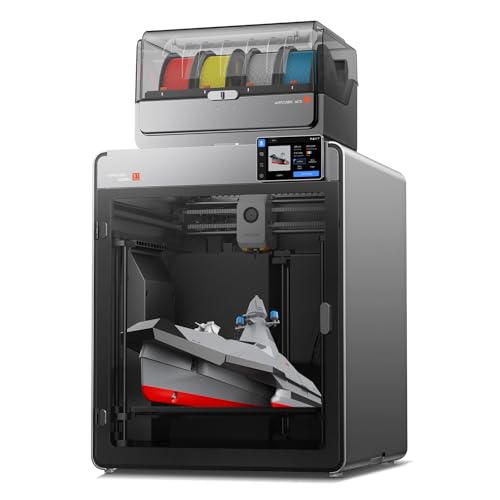

You have a brilliant idea for a multicolor prototype or a detailed cosplay prop, but your current printer struggles with speed or requires tedious manual upgrades. The Creality K2 SE line promises to change that with a robust CoreXY motion system and an optional 4-color printing setup. In this Creality K2 SE review, we evaluate the two primary configurations: the budget-friendly bundle with a comprehensive tool kit and the ready-to-use 4C model. Whether you are a beginner looking for a complete starter package or an experienced maker seeking multicolor capabilities out of the box, this guide will help you decide. For a broader look at the landscape, check out our Top 3D Printers for Home Use in 2026.


Buying Guide
Print Speed and Precision
When you are iterating on designs or fulfilling small batch orders, print speed directly impacts your workflow. Both Creality K2 SE models reach up to 500mm/s with 20,000mm/s² acceleration thanks to the lightweight CoreXY system. The built-in vibration sensor and input shaping algorithm reduce ringing and resonance, so you get smooth walls and sharp details even at top speed. This combination makes it a strong contender among fast 3D printers, comparable to the ELEGOO Centauri Carbon.
Multicolor Capabilities
The K2 SE standard bundle is compatible with the Creality CFS multicolor system, which you can add later to print in up to 16 colors. The K2 SE 4C model comes with four colors ready to go, requiring no extra assembly. For projects that demand vibrant, seamless color transitions without post-processing, the 4C version is the more convenient pick. If you prefer to start with single-color prints and expand gradually, the bundle offers that flexibility.
Build Quality and Stability
A rigid frame is essential for maintaining dimensional accuracy during rapid movements. The K2 SE features a die-cast aluminum alloy frame with corner gussets and dual-side crossbeams. This construction minimizes flex, ensuring reliable layer adhesion and professional surface finishes. Both models share the same sturdy foundation, so your choice here depends on features rather than structural integrity.
Smart Features for Reliable Printing
Long prints can fail due to filament tangles or power interruptions. The K2 SE includes a filament runout sensor, tangle detection, and power loss recovery. The 4C model adds auto bed leveling that probes only the active print area, improving first layer adhesion. These features reduce waste and frustration, making the printer more beginner-friendly. For more beginner-focused options, see our Beginner 3D Printers collection.
Final Thoughts
After evaluating both configurations, we recommend the Creality K2 SE 3D Printer Bundle with 74Pcs 3D for users who want a complete starter kit with all the tools needed for post-processing and the option to add multicolor later. For those who need multicolor printing from day one without any extra steps, the Creality K2 SE 4C 3D Printer is the ideal choice, combining speed, auto leveling, and a compact multicolor system in one package.
Frequently Asked Questions
Can the Creality K2 SE print in multiple colors without upgrades?
The standard K2 SE bundle requires the optional Creality CFS system for multicolor printing. The K2 SE 4C model includes four colors out of the box, so you can create multicolor prints immediately. Both options support up to 16 colors when fully expanded.
How fast is the Creality K2 SE compared to other CoreXY printers?
The K2 SE reaches up to 500mm/s with 20,000mm/s² acceleration, placing it among the faster CoreXY printers in its class. Its vibration sensor and input shaping algorithm maintain quality at high speeds, making it a strong performer for rapid prototyping.
Is the Creality K2 SE suitable for beginners?
Yes, both models offer a ready-to-print setup with smart features like filament runout detection and power loss recovery. The bundle includes a 74-piece tool kit that covers post-processing needs. For more beginner resources, visit our Beginner 3D Printers page.
What materials can the Creality K2 SE print?
The K2 SE works with PLA, PETG, and dual-material breakaway supports. This versatility allows you to create prototypes, functional parts, and decorative models with professional-looking results.