🔥 3D Printer Black Friday Deals: picks worth watching →
When you need parts that survive real-world abuse, standard PLA just doesn’t cut it. You’ve likely wrestled with warping, brittleness, or layer adhesion issues, especially for functional prototypes or end-use parts. That’s where carbon fiber reinforced PETG steps in, and Creality’s lineup offers some compelling options.
This Creality PETG CF review dives into three distinct filaments that blend PETG’s toughness with carbon fiber’s rigidity. Whether you’re printing drone frames, automotive brackets, or durable enclosures, we’ll help you decide which spool deserves a spot on your rack. Let’s get started.


What will your print cost? Use our filament cost calculator.
Buying Guide: What to Look for in PETG-CF Filaments
Choosing the right PETG-CF filament goes beyond just picking a color. You need to consider how the carbon fiber affects printing behavior, mechanical properties, and your printer’s capabilities. Here are the key criteria we evaluated.
Mechanical Strength and Stiffness
Carbon fiber reinforcement dramatically increases stiffness and dimensional stability compared to standard PETG. Look for filaments with a meaningful carbon fiber percentage, like the 8% in Creality’s Hyper PETG-CF, which boosts strength without sacrificing impact resistance. This makes parts less likely to flex or deform under load.
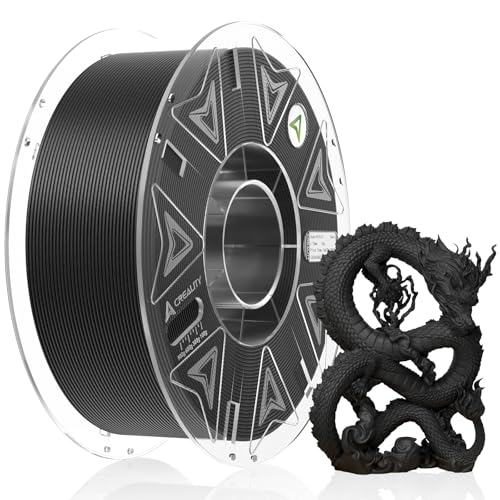
For applications like frames or tooling, this rigidity is a game-changer. Standard PETG, like the Creality PETG Filament 1.75mm 4KG, offers high toughness and elongation but isn’t as stiff. Consider what your part will endure: repeated stress favors carbon fiber, while flexibility might suit standard PETG.
Printability and Speed
Carbon fiber filaments often require higher temperatures and slower speeds, but Creality’s Hyper PETG-CF is engineered for high-speed printing up to 300mm/s. This is a huge plus if you own a fast printer like the Ender-3 V3 or K1 series. Standard PETG, while user-friendly, typically prints at more moderate speeds.
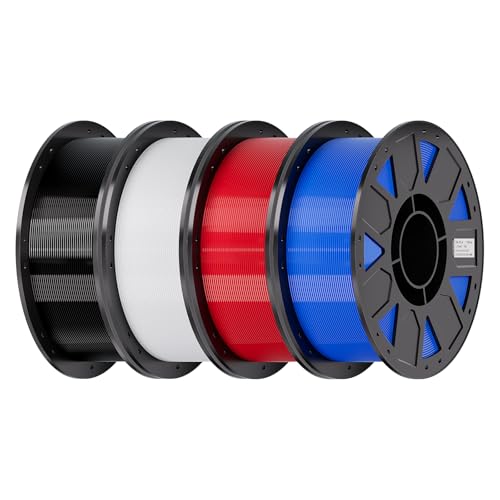
Check your printer’s hotend and nozzle compatibility. Carbon fiber is abrasive, so a hardened steel nozzle is recommended. The Creality PETG Filament 1.75mm, Black & White 2-Pack doesn’t require special nozzles, making it easier for beginners. For a deeper dive into choosing filament, see our practical guide to choosing 3D printer filament.
Surface Finish and Aesthetics
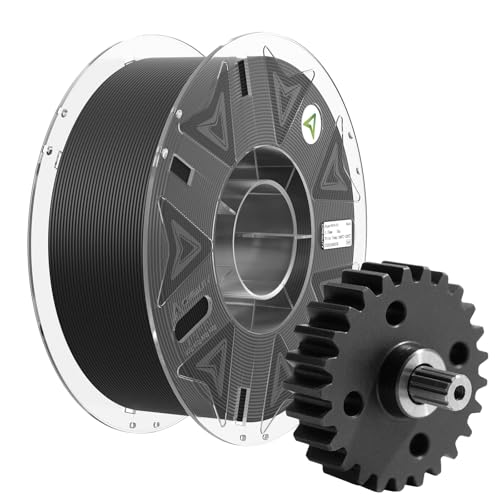
PETG is known for its glossy, transparent finish, but carbon fiber adds a matte, textured look that hides layer lines beautifully. The Creality Official PETG Carbon Fiber Filament produces a sleek, black surface that looks professional and hides fingerprints. Standard PETG offers clarity and gloss, ideal for lampshades or display cases.
If aesthetics matter, decide between the sleek matte of carbon fiber or the transparent shine of standard PETG. The Creality PETG Filament 1.75mm 4KG offers multiple colors, giving you creative freedom. For more on achieving great finishes, check our creality PETG filament review.
Compatibility and Ease of Use
Not all filaments work with every printer. The Creality Hyper PETG-CF features RFID tagging for seamless integration with Creality’s CFS system, automatically setting optimal parameters. This is a boon for multi-color printing. Standard PETG from Creality is compatible with most FDM printers, including Ender, CR, and other popular brands.
Consider your printer’s build volume, hotend temperature range, and whether you have an enclosure. PETG generally prints well without an enclosure, but carbon fiber may benefit from a stable environment. For high-speed printing insights, read our creality PLA hyper review.
Final Thoughts
After evaluating these three filaments, our recommendation hinges on your specific needs: for those seeking the ultimate in stiffness and high-speed performance, the Creality Official PETG Carbon Fiber Filament is a standout, especially with its RFID convenience; for a versatile, all-around tough filament that’s easy to print and great for transparent parts, the Creality PETG Filament 1.75mm 4KG offers incredible value and reliability. Both will elevate your 3D printing game, so choose based on whether you prioritize rigidity or versatility.
Frequently Asked Questions
Is PETG-CF stronger than regular PETG?
Yes, PETG-CF is significantly stiffer and more dimensionally stable due to the carbon fiber reinforcement. It offers higher tensile strength and reduced creep, making it ideal for structural parts that must hold their shape under load. Regular PETG is tougher and more flexible, but not as rigid.
Do I need a hardened nozzle for PETG-CF?
Absolutely. Carbon fiber is abrasive and will quickly wear out a brass nozzle. Use a hardened steel or ruby nozzle to maintain print quality and avoid clogs. Most standard PETG filaments, like the Creality PETG Filament 1.75mm 4KG, do not require a hardened nozzle, making them more beginner-friendly.
Can I print PETG-CF on any 3D printer?
Most modern FDM printers with an all-metal hotend can handle PETG-CF, but you must verify temperature capabilities and nozzle abrasion resistance. Creality’s Hyper PETG-CF is optimized for high-speed printers and works with CFS for multi-color setups. For broader compatibility, standard PETG is a safer bet. For more insights, check our creality PLA plus review.
What are the ideal print settings for Creality PETG-CF?
Recommended printing temperature is 240°C to 270°C, with a build platform at 70°C to 90°C. Use a hardened nozzle and ensure proper drying before printing to avoid moisture issues. For high-speed printing, set your slicer to the filament’s rated speed, but start slower and gradually increase for best results.
In 2026, carbon fiber PETG filaments are becoming mainstream, and Creality offers excellent options. Whether you’re a hobbyist or professional, these filaments deliver performance. For more 3D printing resources, explore our best budget 3D scanner guide.