
You’re staring at a wall of filament spools, wondering if your next print will fail because the bed isn’t level or the first layer won’t stick. Both Anycubic and Bambu Lab promise to solve these headaches, but they approach the problem differently. This guide breaks down the key differences between these two giants, covering multicolor FDM printers, resin machines, and essential accessories, so you can pick the right one for your workshop.
Whether you’re a beginner printing your first Benchy or a professional running a print farm, we’ve got you covered. We’ll dive into build volume, speed, ease of use, and material compatibility, and we’ll also touch on how each brand handles maintenance and upgrades. If you’re new to the world of 3D printing, you might want to check out our guide on resin vs filament 3D printer to understand the two main technologies.


Buying Guide: What to Look For
Multicolor Capabilities
If you’re tired of painting your prints, multicolor is a game-changer. The Anycubic Kobra X Multicolor 3D Printer comes with native 4-color support and can expand up to 19 colors with additional ACE 2 Pro units. This is perfect for complex models that need multiple hues without manual filament swaps.
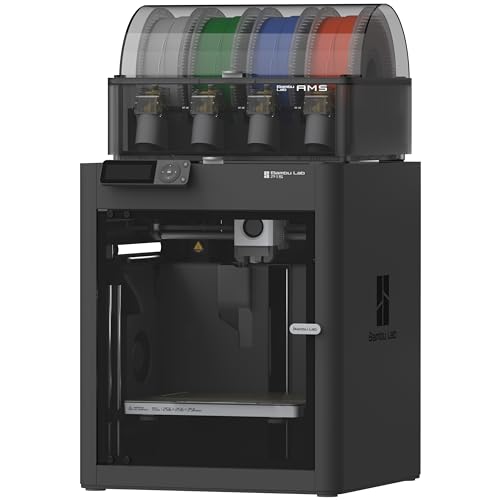
Bambu Lab, on the other hand, is known for its AMS (Automatic Material System) that handles up to 16 colors. While we don’t have a specific Bambu Lab printer in this list, their accessories like the Bambu Lab Glue Stick for 3D Printer Build Plates are designed to work seamlessly with their multicolor systems.
Speed and Precision
Speed matters, especially if you’re producing parts for sale or prototyping. The ANYCUBIC Kobra X 3D Printer, Native 4-Color boasts a max speed of 600mm/s and can complete a Benchy in just 14 minutes. That’s impressive for a machine in its class.
Bambu Lab’s X1 series is famous for its 500mm/s speed, but they also offer high-performance replacement parts like the Bambu Lab P1P/P1S Hotend Complete Kit to maintain that speed with consistent quality. Precision is also key; the Anycubic Kobra X uses LeviQ 3.0 auto-leveling with 49 points, ensuring a flawless first layer every time.
Resin Printing Quality
For miniatures and jewelry, resin is the way to go. The ANYCUBIC Photon P1 14K Resin 3D Printer offers a 10.1-inch 14K LCD screen with a resolution of 13,312 x 5,120 pixels, delivering crisp details down to 0.3mm features. That’s exceptional for capturing fine textures.
Bambu Lab doesn’t currently have a resin printer in their lineup, but they focus on FDM. If you’re torn between the two technologies, our article on Anycubic Photon Mono M7 might give you more insight into what to expect from resin printing.
Ease of Use and Maintenance
Nobody wants to spend hours leveling the bed or troubleshooting clogs. The Anycubic Kobra X features LeviQ 3.0 auto-leveling, and the Photon P1 comes factory-calibrated with Smart Leveling 3.0. Both machines are designed to be as plug-and-play as possible.
Bambu Lab accessories like the Bambu Lab Liquid Glue for Build Plate ensure your prints stick without constant adjustments. And if you need a quick fix, the hotend kit from XMammal is a drop-in replacement that takes just 90 seconds to swap. For beginners, we also recommend checking out our guide on the best resin 3D printers for beginners.
Final Thoughts
In the battle of Anycubic vs Bambu Lab, it really comes down to your priorities. If you want an all-in-one multicolor FDM machine with a huge build volume and AI monitoring, the Anycubic Kobra X Multicolor 3D Printer is a fantastic choice. For those who need high-resolution resin prints, the ANYCUBIC Photon P1 14K Resin 3D Printer delivers outstanding detail. Bambu Lab’s strength lies in their ecosystem and accessories, which enhance the printing experience. Whichever you pick, you’re getting a reliable machine that will bring your ideas to life.
Frequently Asked Questions
Can I use Bambu Lab accessories with Anycubic printers?
Generally, no. Bambu Lab accessories like the glue stick and hotend kit are designed specifically for Bambu Lab printers (P1P, P1S, X1C). Using them on other brands may cause compatibility issues. Always check the compatibility before purchasing.
What is the difference between FDM and resin 3D printers?
FDM (Fused Deposition Modeling) printers melt plastic filament and layer it to create objects, while resin printers use UV light to cure liquid resin. FDM is great for functional parts and larger prints, while resin excels at high-detail models. For a deeper dive, check out our comparison of resin vs filament 3D printer.
Are Anycubic printers good for beginners?
Yes, Anycubic has made significant strides in ease of use. The Kobra X features auto-leveling and AI monitoring, while the Photon P1 comes pre-calibrated. Both are excellent choices for beginners, especially with the extensive online resources available.
What is the best 3D printer deal in 2026?
Deals change throughout the year, but we keep an eye on the latest offers. For the best savings, check our 3D printer black friday deals roundup, which we update regularly with top picks.